
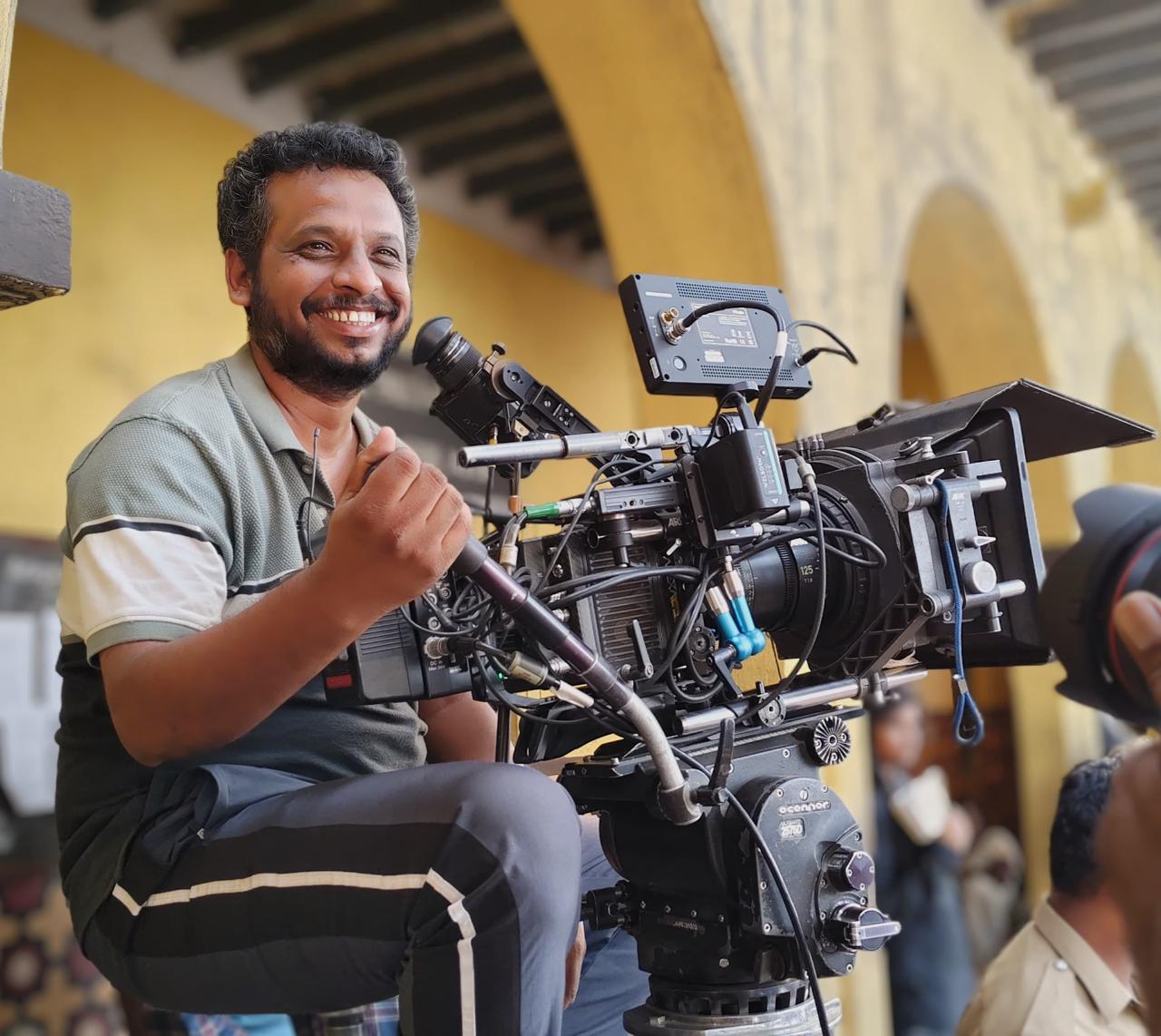
SIRAI: Madhesh Manickam DOP!
Jan 06 2026
Madhesh Manickam, SICA
Director of Photography – SIRAI
Filmography:
Vella Raja (Amazon Prime, 2018) • Taanakaran (2022) • Anbarivu (2022) • Ayothi (2023) • PT Sir (2024) • Boat (2024) • Aan Paavam Pollathathu (2025) • SIRAI (2025) • 29 (Shooting in Progress)
Introduction
Madhesh Manickam is a SICA member and one of the most sensitive visual storytellers of the new generation of Tamil cinema. With a background in fine arts and painting, his cinematography reflects a rare balance of composition, restraint, and emotional realism.
From Amazon Prime’s first Tamil web series Vella Raja to critically acclaimed films like Taanakaran and SIRAI, his work consistently shows a deep understanding of light, darkness, and visual psychology rather than mere technical display.
After the special SICA screening of SIRAI, we had an in-depth conversation with Madhesh Manickam about his journey, his visual philosophy, and the technical and emotional design behind the film.
In Conversation with Madhesh Manickam
Q: Everyone knows your work today, but your journey began in fine arts. How did that shape you as a cinematographer?
Madhesh Manickam:
I actually began with painting at the College of Fine Arts. That taught me composition, tonal values, and patience. I used to photograph my own paintings just to document them. That’s when I realised the camera is also a tool for visual design, not just recording.
Later, when I became a student reporter for Anandha Vikatan, I learned something very important — images must carry truth and timing, not just beauty. That combination pushed me towards cinematography.
Q: How did your professional cinema training happen?
Madhesh Manickam:
I worked as Assistant DOP under Siddharth and also with Balaji Ranga. Those years taught me discipline, preparation, and how to think in sequences instead of individual shots. That period shaped my foundation.
Q: Your first major independent work was Vella Raja, right?
Madhesh Manickam:
Yes. Vella Raja (2018) was Amazon Prime’s first Tamil web series. That project changed many things for me. OTT content needs honest, controlled, non-cosmetic visuals. It taught me restraint.
Q: Taanakaran was a turning point in your career. What was your visual approach there?
Madhesh Manickam:
Taanakaran is a harsh world. We shot in April–May in open locations. The sun itself became a character. I wanted the audience to feel the heat and exhaustion.
So we embraced hard light, bright exposure, and brown, dry, sun-burnt tones. It was physically very difficult, but visually it gave the film its soul.
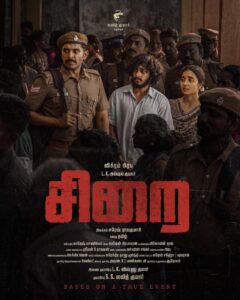
Q: How did SIRAI come to you?
Madhesh Manickam:
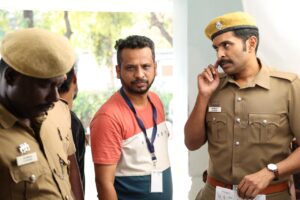
Director Thamizh told me a one-line which was initially planned as part of an anthology. Later my college friend Suresh expanded it into a full feature with love, police drama, and emotional layers.
When I heard it, my first thought was: this film must feel candid and real. Not designed. Not decorated.
Q: What was your core visual philosophy for SIRAI?
Madhesh Manickam:
Restraint.
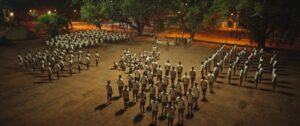
I wanted deep nights, selective lighting, more practical sources, and brighter days to create emotional contrast. Earlier I used to light slightly brighter. For SIRAI, I was very sure I must have the courage to go dark.

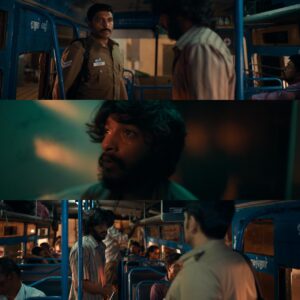
Q: The bus stand opening sequence is very striking. How did you design it?
Madhesh Manickam:
That scene needed real chaos and crowd energy, but also clear, readable visuals.
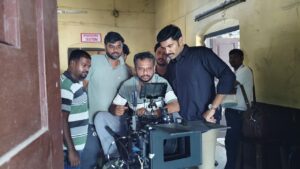
So for that sequence alone, I used a probe lens and RED Raptor for high-speed shots. For the rest of the film, we used ARRI Alexa Mini LF with Signature Prime lenses.
Q: Why Alexa Mini LF and Signature Primes?
Madhesh Manickam:
Because SIRAI needed tonal depth, soft highlight roll-off, and texture rather than digital sharpness. It is a film about faces, silence, and darkness.
Q: What were your main lens choices?
Madhesh Manickam:
I kept it very simple: 35mm, 47mm, and 85mm. But mostly I stayed on 47mm because it feels neither wide nor tele — it feels human.
Q: What were your exposure strategies?
Madhesh Manickam:
Interiors were mostly around T1.8. Exteriors were between T2.8 and T4. This was not for shallow depth style, but to protect shadows and let darkness breathe.
Q: The night scenes have a beautiful warm tone with open blacks. That’s unusual.
Madhesh Manickam:
Normally, when we go warm, we crush the blacks. But here I tried a warm tone with slightly open black levels. This made the darkness feel more emotional and more realistic, not stylised.
Q: The camera feels very still in some scenes and very fluid in others. Was that planned?
Madhesh Manickam:
Yes.
In the flashback and Khader Baasha police station scenes, the camera is steady and observing. In the journey portions, the camera glides with the characters. Camera movement should come from psychology, not equipment.
Q: You already shot a cop film in Taanakaran. How did you differentiate SIRAI?
Madhesh Manickam:
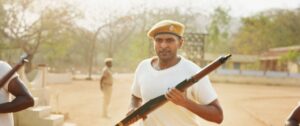
Taanakaran is bright, hot, harsh, and dry. SIRAI is subdued, deep, emotional, and restrained. Even though both deal with police, their emotional climates are completely different.
Q: Aan Paavam Pollathathu looks very different visually.
Madhesh Manickam:
That film is mostly interior-based, about upper-middle-class life. So I kept the visuals glossy and colourful, but still grounded and believable.
Q: How do you see technology today in cinematography?
Madhesh Manickam:
Technology is only a servant. It cannot decide emotion. Dynamic range, resolution, lenses — all are meaningless if you don’t know where to put light and where to allow darkness.
Q: Finally, how do you define cinematography in one line?
Madhesh Manickam:
Cinematography is not about showing things. It is about deciding what should remain unseen.
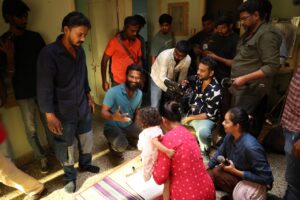
Article drafted by
CJ Rajkumar
Author/ Cinematographer