
The Visual Mastery of Ritwik Ghatak!
Feb 07 2026
The Visual Mastery of Ritwik Ghatak: Dislocation, Depth and Derangement in Bengali Cinema
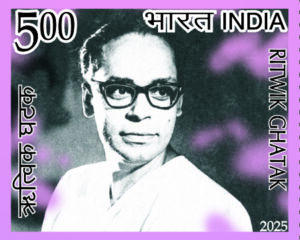
Often discussed alongside Satyajit Ray and Mrinal Sen, Ghatak occupies a radically different visual territory.
For him, the camera is not a neutral observer. It is a political and emotional instrument shaped by the trauma of the 1947 Partition and the cultural rupture of Bengal. His frames deliberately break classical visual comfort—through distortion, spatial tension and fractured staging—to mirror a displaced society.
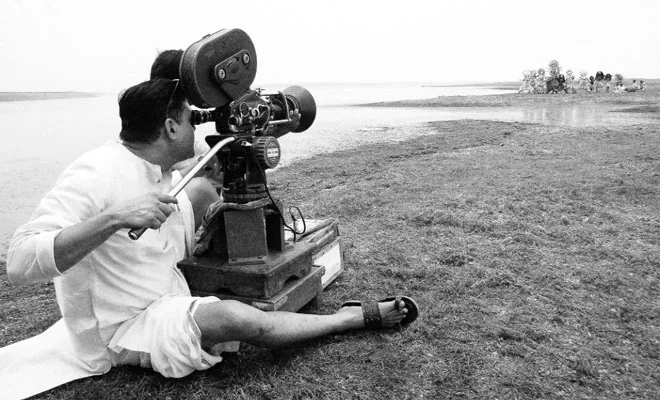
DOPs of Rithwik Ghatak films
* Dinen Gupta
*Dilip Ranjan Mukhopadhyay
* Baby Islam
* Ramanada Sengupta
For Cinematographers Ghatak’s cinema is a masterclass in how visual grammar itself can carry ideology and emotion.

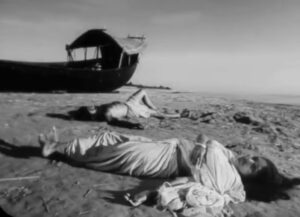
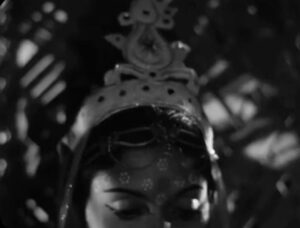
Wide-Angle Lenses and Spatial Dislocation
In Meghe Dhaka Tara and Subarnarekha, Ghatak’s persistent use of wide-angle lenses produces:
visible spatial distortion
exaggerated foreground–background relationships
a strong sense of the land “pressing” against the characters
The wide lens is not used for scale alone.
It repositions the human body inside history—figures appear slightly misaligned, pushed toward the edges of the frame or visually overpowered by their surroundings.
In Meghe Dhaka Tara, Nita’s presence is repeatedly framed against stretched landscapes and heavy skies. The space around her becomes emotionally hostile.
In Subarnarekha, the river and open terrain are visually dominant, compressing human figures and turning geography into a narrative force.
Key visual idea for cinematographers:
Wide-angle distortion becomes a dramaturgical tool—not a stylistic flourish.
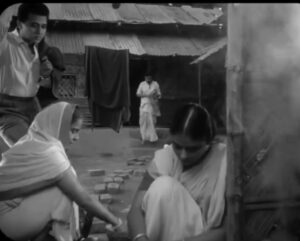
2. Deep Focus and Layered Mise-en-Scène
Ghatak consistently constructs frames in multiple narrative planes.
Foreground action, background movement and architectural depth coexist in sharp detail.
This approach recalls the deep-focus traditions associated with Orson Welles and The Magnificent Ambersons, but Ghatak’s use is distinctly political rather than formalist.
In Meghe Dhaka Tara:
Nita’s emotional state occupies the foreground
everyday domestic activity continues behind her
social neglect and personal suffering are visually forced into the same frame
The image itself becomes a social counterpoint.
Deep focus in Ghatak’s cinema is not about visual richness.
It is about simultaneous realities—personal tragedy and social collapse occurring inside one uninterrupted visual field.
3. Extreme Angles and the Politics of Distortion
Ghatak frequently avoids neutral eye-level framing.
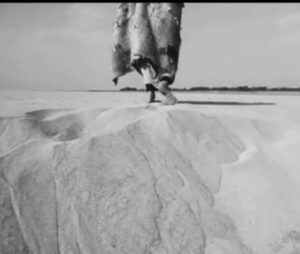
Low angles, steep high angles and sudden reframing create an unstable visual field.
In Ajantrik, this visual restlessness is reinforced through abrupt camera movement and kinetic montage. The result is a constant sensation of imbalance—psychological as well as spatial.
Across Subarnarekha and Ajantrik, extreme angles:
fracture the viewer’s spatial orientation
isolate characters within tilted architectural lines
visually echo fractured identities after Partition
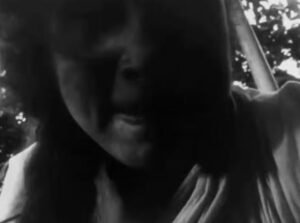
Even close-ups are rarely comforting. Faces are cropped tightly, sometimes floating against empty or harshly lit backgrounds, intensifying emotional rupture.
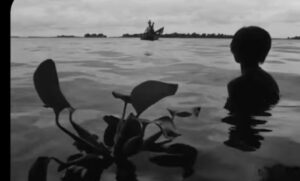
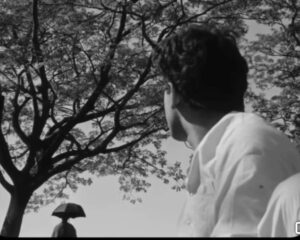
Technical insight:
Angle selection becomes ideological framing—literally shaping how power, vulnerability and alienation are perceived.
4. Light, Contrast and Allegorical Space
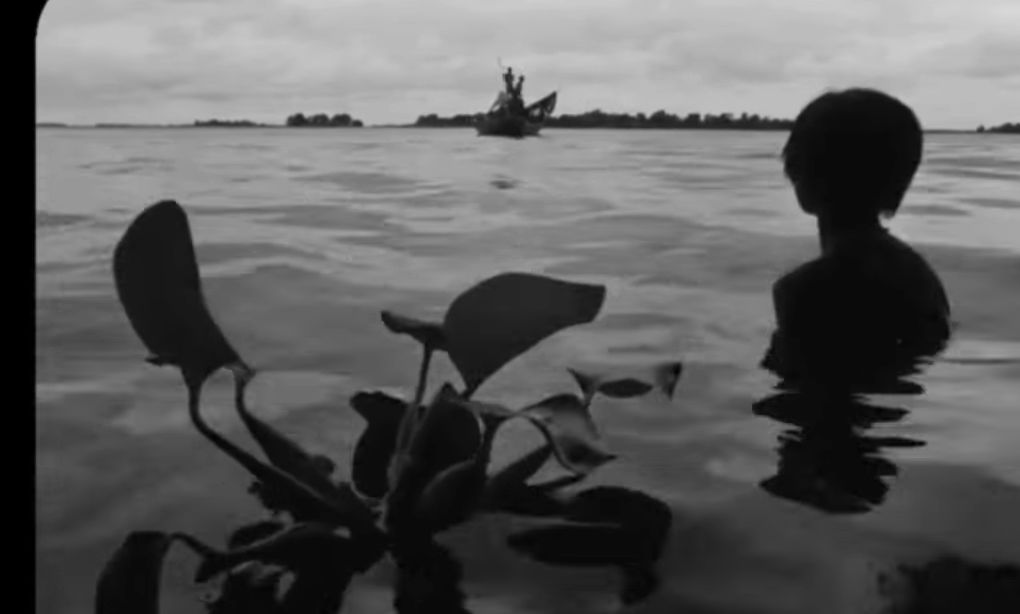
Ghatak frequently pushes black-and-white photography toward high-contrast, almost theatrical lighting.
Backlight, silhouetted bodies and sharply separated tonal planes elevate ordinary situations into symbolic events.
This visual approach reaches maturity in
Komal Gandhar and Titash Ekti Nadir Naam.
The image oscillates between:
documentary realism
and mythic, allegorical presence
Characters momentarily appear as archetypes—refugee, martyr, witness, survivor—without abandoning social specificity.
5. Ghatak’s Visual Grammar – A SICA Perspective
Ritwik Ghatak’s cinema demonstrates that visual components can function as:
narrative structure
political commentary
emotional architecture
His recurring visual strategies are:
wide-angle distortion to materialise displacement
deep-focus staging to reveal social simultaneity
extreme angles and tight close-ups to express psychological and cultural fracture
high-contrast lighting to move from realism into allegory
For contemporary cinematographers, Ghatak offers a vital reminder:
Visual design is not decoration.
It is an ethical and political choice embedded in framing, lens selection, focus strategy and spatial organisation.
In an era dominated by polished symmetry and stabilised imagery, Ghatak’s deliberately disturbed frames continue to stand as a powerful alternative—where cinema confronts history rather than smoothing it over.
Article by
CJ Rajkumar
Author/ Cinematographer