
Ashok Kumar : Painting with Light!
Oct 22 2026
Ashok Kumar Agarwal: A Master Who Made Light Tell Stories
Most significant aspect of Ashok Kumar Agarwal’s career is the range of his visual language. He worked on more than 125 films across Malayalam, Tamil, Telugu and Hindi cinema, moving from intimate, naturalistic dramas to elaborate commercial productions and technically ambitious projects. He also directed films in multiple languages.
ASHOK KUMAR AGARWAL
# The Art of Seeing Light
A tribute to one of Indian cinema’s distinctive cinematographers
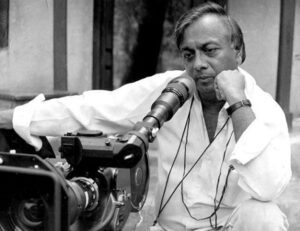
Indian cinematography has been shaped by artists who understood that a camera is more than a recording instrument. Ashok Kumar Agarwal belonged to that tradition. Across a career spanning several decades, he demonstrated how lighting, composition, atmosphere and camera placement could become powerful storytelling tools.
Working across Malayalam, Tamil, Telugu and Hindi cinema, he built an impressive body of work that moved between artistic realism, intimate family dramas, mainstream entertainers and ambitious visual spectacles.
. The Mahendran connection: A defining chapter
Ashok Kumar’s collaboration with director J. Mahendran is among the most important chapters in his career.
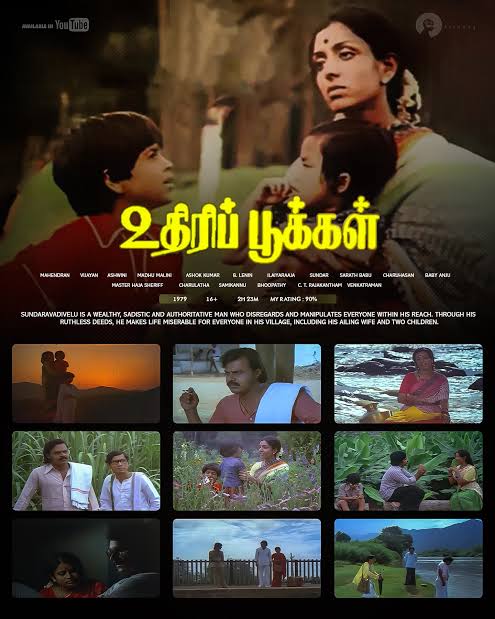
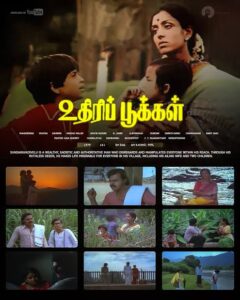
Mahendran had admired the cinematographer’s work in Malayalam cinema and approached him for *Uthiripookkal* (1979), after Balu Mahendra was unavailable. The film marked Ashok Kumar’s Tamil cinema debut and established a creative partnership that would shape the visual identity of several landmark films.
Their collaboration extended to *Johnny*, *Nenjathai Killathe*, *Nandu* and *Metti*, among other films.
What made this partnership distinctive was its restraint. Instead of treating every frame as a spectacle, the images served the characters and their emotional worlds. Everyday environments, domestic interiors, streets and natural surroundings became expressive cinematic spaces.

*Nenjathai Killathe*: When light became emotion
Released in 1980, *Nenjathai Killathe* earned Ashok Kumar the National Film Award for Best Cinematography, as well as the Tamil Nadu State Film Award for Best Cinematographer.
The film remains an important reference for cinematographers interested in the relationship between naturalistic lighting and emotional storytelling.
Its visual appeal lies in the treatment of ordinary urban life, the changing qualities of daylight and the atmosphere created around characters. The blue tones associated with twilight and the fleeting moments when sunlight breaks through the environment demonstrate how time of day can influence a scene’s emotional character.
The larger lesson is that cinematic beauty does not always require elaborate lighting. It requires an understanding of the direction, quality, colour and duration of light — and the ability to recognise the right moment to photograph it.
. Natural light, backlight and outdoor cinematography
Alongside contemporaries such as Balu Mahendra, Ashok Kumar helped bring greater attention to the expressive potential of naturalistic imagery in South Indian cinema.
Backlight can separate a subject from the background, reveal the texture of hair and clothing, and create depth in an otherwise flat exterior. When balanced with ambient light or carefully controlled fill, it can preserve a sense of realism while giving the image a distinctive visual character.
Ashok Kumar’s work is worth studying in this context: not simply for individual lighting effects, but for how cinematography responds to the environment and the dramatic requirements of a scene.
His career also reminds us that naturalistic lighting and extensive lighting equipment are not opposing philosophies. The choice depends on the scale of the production, the location, the intended visual style and the story being told.. *Johnny*, *Nandu* and *Metti*: Atmosphere over ornament
The films he made with Mahendran further reveal the value of visual restraint.
In *Johnny* (1980), the images support the film’s mood and the complex presence of its central character. In *Nandu* (1981), intimate human relationships and the texture of everyday spaces remain central to the visual experience. *Metti* (1982) continues this interest in personal relationships and domestic environments.

These films offer valuable lessons in composition, the use of negative space, visual continuity and the relationship between actors and their surroundings.
For students of cinematography, they are reminders that a frame need not be visually crowded to be expressive.

. From intimate drama to spectacular cinema: Jeans
Ashok Kumar’s versatility becomes particularly evident when we move from Mahendran’s restrained visual worlds to Shankar’s *Jeans* (1998).
The film demanded a different scale of visual execution, with elaborate production design, glamorous locations, carefully controlled lighting and large musical sequences.
Here, cinematography had to accommodate spectacle while preserving the clarity and appeal of the performers. Extensive lighting arrangements and coordinated setups were part of the larger production approach.
The contrast between Nenjathai Killathe and Jeans illustrates an essential quality of a great cinematographer: the ability to change visual language without losing technical command.
A cinematographer must know when to work with available light, when to shape it and when a production requires a carefully engineered lighting environment.
My Dear Kuttichathan: Embracing technical innovation
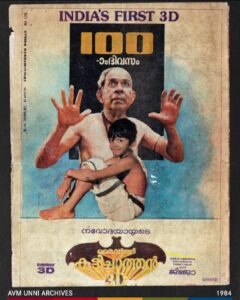
Ashok Kumar also worked on My Dear Kuttichathan (1984), widely recognised as India’s first 3D feature film.
Three-dimensional filmmaking requires careful consideration of depth, composition, camera positioning and the relationship between foreground and background elements.
His participation in such a technically ambitious project demonstrates the breadth of his experience beyond conventional two-dimensional cinematography.
It also places him within an important period in Indian cinema, when filmmakers and technicians were exploring new ways to expand the theatrical experience.

Bawandar: A different kind of visual responsibility
In *Bawandar* (2000), directed by Jagmohan Mundhra, Ashok Kumar worked on a film rooted in social realities and the experiences of rural women.
The visual demands of such a story differ considerably from those of a lavish commercial musical. Locations, landscapes, faces and the atmosphere of the environment must support the human drama without overwhelming it.
His cinematography received the V. Shantaram Award for Best Cinematography for the film.
Bawandar is a significant reminder that his visual contribution extended beyond Tamil cinema and that his professional range encompassed stories with very different cultural and dramatic contexts.
A career across languages and filmmaking traditions
Ashok Kumar’s filmography includes works in Malayalam, Tamil, Telugu and Hindi cinema.
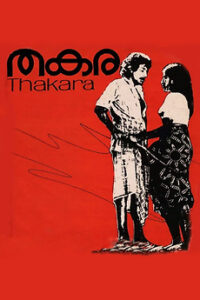
His Malayalam credits include films such as Chembarathi, Swapnam,Taxi Driver, Thakara and Nokkethadhoorathu Kannum Nattu. His Tamil work ranges from Uthiripookkal and Nenjathai Killathe to Vetri Vizha, Mannan and Jeans
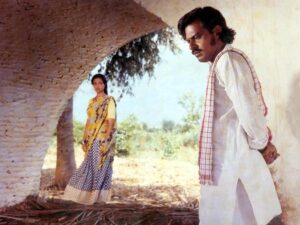
He also worked in Telugu cinema and Hindi films, including *Kamagni*, *Bawandar* and *Kehtaa Hai Dil Baar Baar*.
Such a career demanded the ability to adapt to different directors, production cultures, locations, budgets and storytelling conventions.
He was also associated with Janmabhoomi, Swapnam, Taxi Driver for which he received Kerala State Film Awards for cinematography in different years.
. The cinematographer who became a director
Ashok Kumar was not content to remain only behind the camera. He also directed films, including the Tamil film Andru Peytha Mazhaiyil, the Telugu film Abhinandana and the Hindi film Kamagni. His directing credits reflect an interest in storytelling beyond the technical responsibilities of cinematography.
His achievements were recognised through the National Film Award, Tamil Nadu and Kerala State Film Awards, a Nandi Award and the V. Shantaram Award. He also served on the jury of the 43rd National Film Awards.
His influence extended to the wider cinematography community, and his career provides a valuable reference for generations of aspiring filmmakers.
What today’s cinematographers can learn from Ashok Kumar
Observe light before controlling it. Understand how sunlight changes across the day, how shadows define space and how backlight separates a subject from the environment.
Let the story determine the image. The visual approach of *Nenjathai Killathe* is different from that of *Jeans* because their dramatic and aesthetic requirements are different.
Master both naturalism and technical precision. Available light, reflectors, diffusion, fill and extensive artificial lighting are tools to be selected according to the scene.
Treat locations as part of the storytelling. Streets, homes and landscapes can establish character, social context and emotional atmosphere without excessive visual embellishment.
Keep learning new techniques.His work on *My Dear Kuttichathan* and his movement across several film industries demonstrate the value of technical adaptability.
Remembering Ashok Kumar
Ashok Kumar’s legacy is not confined to awards or individual films. It lives in the frames that continue to teach us how light, space and composition can serve a story.
From the quiet emotional world of Mahendran’s cinema to the visual grandeur of Jeans, his career demonstrates that cinematography is both an art of observation and a craft of precision.
Remembering Ashok Kumar Agarwal — a filmmaker who understood that light is not merely something we place before a camera; it is something through which we tell stories.
Drafted by
CJ Rajkumar
Author/ Cinematographer