
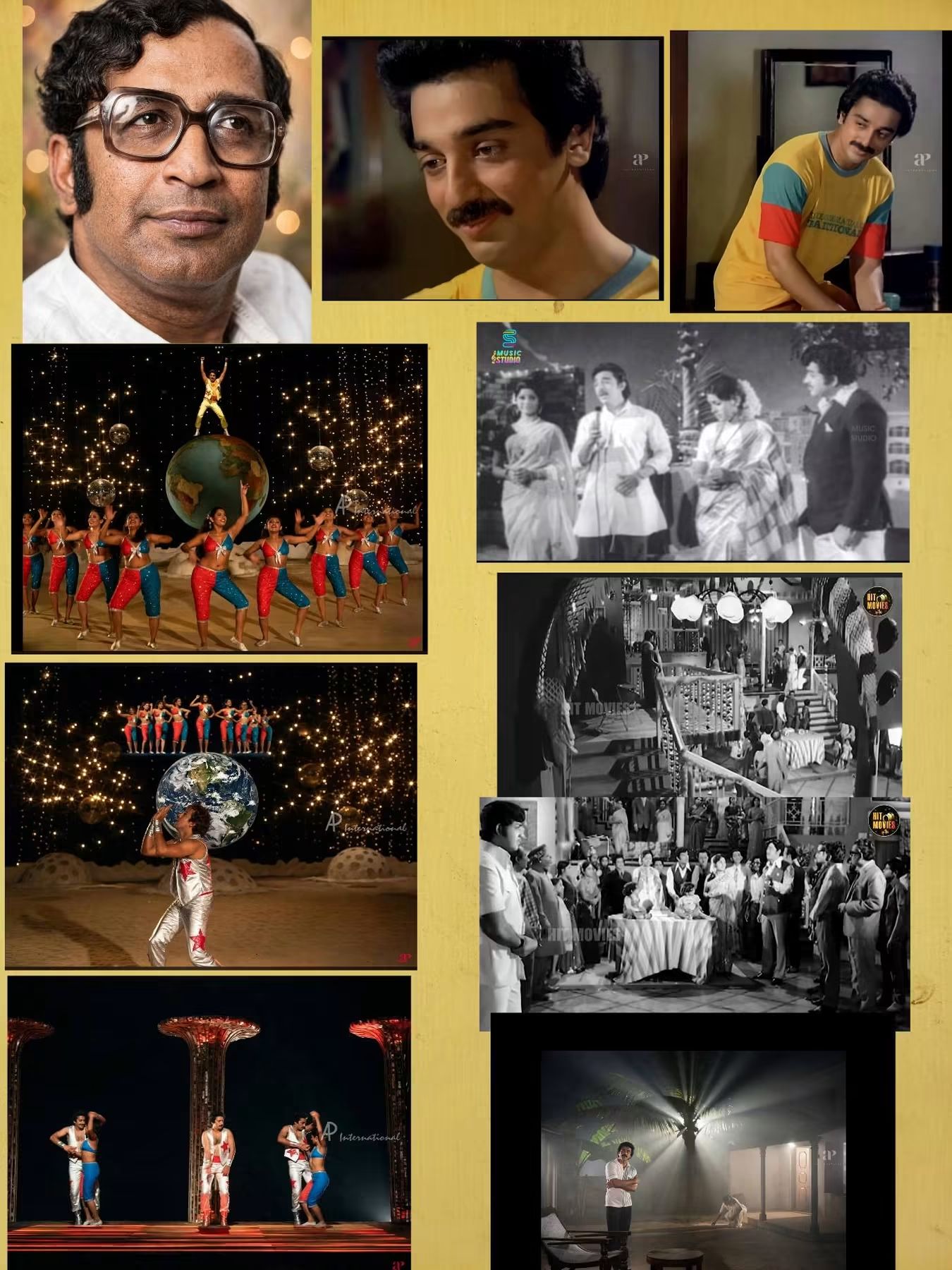
Babu Cinematographer: Memories from Ravindhar
Sep 25 2026
Babu: The Cinematographer Who Made the Camera Speak
Article by Ravindhar, Cinematographer
Some of the grandest chapters in the history of cinema are not born from elaborate plans. They emerge unexpectedly—through moments of coincidence, instinct and timing—and are eventually written into history in letters of gold.
The entry of the legendary cinematographer Babu into Tamil cinema was one such extraordinary turning point.
He brought a new vocabulary to the visual language of Tamil commercial cinema—one defined by speed, precision, innovation, scale and an almost fearless approach to camera movement. At a time when filmmaking was entirely dependent on celluloid, mechanical ingenuity and the physical skill of the cinematographer, Babu transformed limitations into opportunities.
And remarkably, his journey began with a chance observation inside a dark studio floor.
It was a day when a rush print was being prepared. Director V. C. Guhanathan happened to walk into the studio during a break. Inside, an elaborate scene was being shot with a large crane. The cinematographer Lamba Prasad, known for his work on major films including Puthiya Paravai, was unable to climb onto the crane because of ill health.
But someone else was operating the camera.
A young man stood on the crane, moving the camera with astonishing speed and confidence. His instinctive framing, his ability to find precise angles almost instantaneously, and his complete involvement with the camera caught Guhanathan’s sharp eye.
Guhanathan was known for recognising unusual talent almost instinctively. The same intuition with which he had reportedly recognised the musical genius of Ilaiyaraaja allowed him to notice something special in that young camera operator.
He watched him for ten or fifteen minutes.
Then he asked P. R. Somu:
“Who is that young man?”
The answer came:
“He is Babu, Lamba Prasad’s operating cameraman.”
That brief encounter planted a seed.
Within days, veteran filmmaker T. R. Yoganand, director of monumental films such as Madurai Veeran and Raja Desingu, was looking for a talented cinematographer for Raniyar Kuzhandhai. Without hesitation, Guhanathan suggested one name:
Babu.
Yoganand apparently responded with the trust of someone who knew Guhanathan’s judgement:
“If Guhan has recommended him, he must be right.”
And so began the remarkable cinematographic journey of Anand Krishnan—better known to generations of filmmakers and audiences simply as Babu.
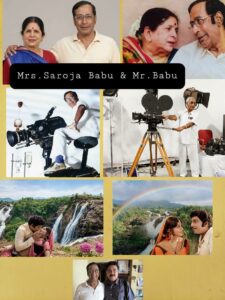
The Beginning of a Historic Partnership
When S. P. Muthuraman was preparing to leave AVM Studios and establish himself as an independent director, Guhanathan helped assemble a formidable technical team around him.
Art direction was entrusted to Radha. Music was handled by T. V. S. Raju. Assistants such as G. N. Rangarajan, C. N. Muthu and Durairaj became part of the creative team.
And at the centre of this technical ensemble stood Babu—the man responsible for giving the films their visual identity.
Beginning with Raniyar Kuzhandhai, the collaboration extended through films such as Kanimuthu Paappa, Petha Manam Pithu, Kasi Yathirai, Deiva Kuzhandhaigal and Nalla Penmani.
Eventually, the partnership grew into one of the most remarkable director-cinematographer collaborations in Tamil cinema, particularly through their association with AVM Productions.
S. P. Muthuraman and Babu worked together on 49 films.
That number alone conveys the extraordinary trust between a filmmaker and a cinematographer. It was not merely a professional association; over decades, it became a shared visual language—an instinctive understanding of rhythm, performance, camera movement, production design and storytelling.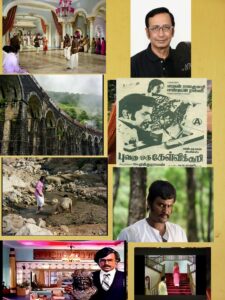
The Camera That Helped Create a Superstar
Babu’s camera played an important role in shaping the screen image of Rajinikanth, particularly during the period when the actor was evolving into the larger-than-life action star who would eventually become a phenomenon.
The realism of Bhuvana Oru Kelvikkuri.
The stylish visual treatment of Priya.
The emotional intensity of Aarilirundhu Arubadhu Varai.
The explosive action and kinetic energy of films such as Murattu Kaalai, Kazhugu, Raanuva Veeran, Pokkiri Raja, Pudhu Kavithai, Paayum Puli and Nallavanukku Nallavan.
Each demanded a different visual approach.
Babu never treated the camera as a passive recording device. In action cinema, it became an active participant—moving with the performers, anticipating the impact of a stunt and creating a sense of physical energy that reached the audience directly.
Yet, the same cinematographer could completely change his visual vocabulary when the story demanded sensitivity and restraint.
—
From Rajinikanth to Kamal Haasan—A Different Visual Language
Babu was equally significant in some of Kamal Haasan’s most celebrated films of the period, including Sakalakala Vallavan and Thoongadhey Thambi Thoongadhey.
His career extended beyond Tamil cinema as well, with work in Telugu, Kannada and Hindi films.
What makes his body of work particularly fascinating is not simply the number of films he photographed, but the remarkable variety within them.
He understood that cinematography is not about imposing a signature style on every film.
It is about discovering what the film requires.
In a commercial action film, Babu could make the camera aggressive, energetic and flamboyant.
In an emotional drama, he could almost make the camera disappear.
That ability—to make the cinematographer visible when the film demanded visual energy, and invisible when the story demanded emotional intimacy—is one of the marks of a truly mature cinematographer.
—
When the Camera Became Invisible
Films such as Oru Oodhapoo Kan Simittugiradhu, Mogam Muppadhu Varusham and Mayangugiral Oru Maadhu reveal another side of Babu.
There is no unnecessary display of technique.
No attempt to announce:
“Look at the cinematographer.”
Instead, the camera quietly observes.
Its movements are restrained. Its compositions respect the emotional geography of the characters. Its framing allows performances to breathe.
The camera does not compete with the actors.
It listens to them.
Through subtle movement, controlled framing and sensitive lighting, Babu was able to photograph internal emotions—loneliness, vulnerability, desire, pain and hesitation—without exaggerating them.
This is a difficult discipline.
A cinematographer must know not only what to show, but also what not to show.
Babu understood that distinction.
—
A Master of the Analog Era
Today, filmmakers work with sophisticated digital cinema cameras, high-resolution monitors, virtual production environments, CGI, real-time compositing and sophisticated stabilisation systems.
Babu worked in a completely different era.
There were no digital monitors offering instant playback.
There was no CGI to correct a difficult shot later.
There was no virtual camera system.
There were no modern electronic stabilisation tools.
There was film negative.
There was the camera
There was light.
And there was the cinematographer’s judgement.
Every exposure mattered.
Every movement had to be rehearsed.
Every framing decision had consequences.
It was within these limitations that Babu developed some of his most audacious visual techniques.
—
The Train Sequence: Camera Against the Machine
One of the most memorable examples was the famous train fight sequence shot at Tenkasi railway station.
To capture the tremendous physical energy of the moving train, cameras were mounted using specialised vacuum-base systems at extraordinary positions—towards the front of the locomotive, beneath the coaches and along their sides.
These were not merely spectacular placements.
They required an understanding of vibration, camera stability, lens perspective, safety, movement and timing.
The camera had to survive the environment while simultaneously producing an image that made the audience feel as though they were physically travelling with the train.
In an era without modern remote camera systems and compact digital bodies, such shots required tremendous physical courage and technical ingenuity.
—
Bringing the Audience Into the Bullock-Cart Race
A similar spirit can be seen in the bullock-cart racing sequence filmed in Pollachi.
To capture the speed and violence of dust rising from the ground, Babu mounted a camera extremely low—close to the underside of the racing cart itself.
The result was not simply a record of the race.
It transformed the camera’s position into the viewer’s physical position.
The audience was no longer watching the race from a safe distance.
They were inside it.
The dust, speed, vibration and movement became part of the visual experience.
This is where Babu’s understanding of perspective became particularly powerful.
He understood that camera height is not merely a technical decision; it changes the audience’s relationship with the action.
—
Creating the Double Image Before the Digital Age
Another remarkable example of his technical mastery came in the treatment of Kamal Haasan’s dual-role sequences.
When two characters played by the same actor had to appear together within a single frame, Babu worked with optical masking techniques on film negative.
Today, such a shot can be accomplished relatively easily through digital compositing.
But during the film era, the process demanded extraordinary precision.
The composition had to be carefully planned.
The camera had to remain absolutely stable.
Lighting had to remain consistent.
The actor’s movements had to be controlled.
The masked areas had to align precisely.
And the final composite had to work within the limitations of photochemical processing.
There was no digital undo button.
A tiny error could compromise the entire shot.
Babu’s ability to execute such images with precision demonstrates not only technical skill, but also an understanding of the entire photographic and laboratory process.
—
The Art of Lighting Large Studio Floors
At AVM Studios, Babu worked within the grand studio floors and absorbed the traditions of earlier masters such as Mastan and K. S. Prasad.
Their conventional approach to studio lighting—built around carefully controlled key, fill, backlight, modelling and separation—formed part of the visual tradition that Babu inherited and then adapted to his own requirements.
Watching Babu light a large studio floor was itself a visual experience.
The scale of the set demanded an understanding of how light travelled across large spaces.
The placement of sources had to be coordinated with camera movement, blocking, production design and the exposure latitude of film stock.
He could create spectacle with colour, but he could also create extraordinary depth using nothing more than light and shadow.
His black-and-white work demonstrates this beautifully.
Without the advantage of colour separation, he had to depend on contrast, tonal relationships, texture, exposure and controlled lighting to create dimensionality.
That discipline is often forgotten in an era where colour grading can radically reshape an image after capture.
—
The Left Eye of a Master Operator
There is another fascinating detail about Babu that has intrigued fellow cinematographers.
Most camera operators traditionally place their right eye against the viewfinder.
Babu, however, operated predominantly using his left eye.
With Mitchell cameras, whose parallax viewfinder was positioned somewhat to the side, such an operating style could be accommodated.
But with Arriflex reflex cameras, the situation was considerably more demanding.
The reflex viewing system places the operator’s face much closer to the camera body, making left-eye operation physically awkward and challenging.
Yet Babu developed his own physical relationship with the camera.
He maintained balance, judged the edges of the frame and operated the camera with remarkable confidence.
It is a small detail, perhaps.
But cinematographers understand what it represents.
Operating a camera is not merely about seeing through a viewfinder. It is about developing a physical connection with the machine—understanding its weight, inertia, movement, balance and response.
For Babu, the camera was almost an extension of his body.
—
A Cinematographer Who Never Imposed Himself on the Story
Perhaps Babu’s greatest strength was not any particular camera technique.
It was his ability to understand the soul of a film.
A cinematographer can be technically brilliant and still fail to serve the story.
Babu possessed something rarer—the ability to combine technical audacity with narrative sensitivity.
In commercial cinema, his camera could race.
It could swing.
It could attack.
It could transform an action sequence into spectacle.
But in a sensitive dramatic scene, that same camera could become almost invisible.
That flexibility is the mark of a cinematographer who understands that visual style should emerge from the story rather than exist independently of it.
—
Recognition and Legacy
In 1978, Babu received the Tamil Nadu State Film Award for Best Cinematographer for Kaatrinile Varum Geetham.
The South Indian Cinematographers Association (SICA) also recognised and honoured his distinctive contribution to cinematography.
AVM Studios acknowledged his contribution with deep appreciation, describing him as “one of the great pillars of Indian cinema.”
His work was also featured in the documentary A Creator with Midas Touch, which chronicled the creative journey of director S. P. Muthuraman.
After a career spanning several decades, Babu’s final film was Thaali Kaatha Kaaliyamman, released in 2001.
He passed away at the age of 88.
But the end of a cinematographer’s physical journey does not necessarily mark the end of his work.
Because cinematography is preserved in frames.
And frames have extraordinarily long memories.
—
The Light That Remains
People eventually leave.
Studios change.
Cameras become obsolete.
Film stock disappears.
Technologies evolve.
The enormous Mitchells and Arriflexes of Babu’s generation have largely given way to compact digital cinema cameras, virtual production systems and computational imaging.
But the fundamental language of cinematography remains.
Where do we place the camera?
Why does it move?
What should the audience see?
What should remain unseen?
How should light reveal character?
When should technique announce itself—and when should it disappear?
Babu answered these questions through thousands of frames.
The story began almost accidentally, inside a dark studio floor, when V. C. Guhanathan happened to notice a young operating cameraman standing on a crane.
He saw something there.
That brief moment of recognition led to a career that would shape generations of Tamil commercial cinema.
From the towering sets of AVM to speeding trains, bullock-cart races, action sequences, intimate dramas and carefully controlled studio lighting, Babu demonstrated that the cinematographer’s real power lies not merely in technology, but in the imagination to use technology in service of emotion.
The young man whom Guhanathan noticed that day became a cinematographer whose camera could move with the speed of action, breathe with the rhythm of emotion and disappear completely when the story demanded silence.
The man may have left us.
But that light—the light first recognised by Guhanathan in the darkness of a studio, and later amplified through his extraordinary collaborations with filmmakers such as S. P. Muthuraman—continues to live on.
On the silver screen, Babu’s images still speak.
And they will continue to do so, long after the cameras with which he created them have themselves become part of cinema history.If you want, I can also make this more like a high-end SICA / cinematography-journal feature, with a stronger opening hook, more technical terminology, and a slightly more authoritative “Master Cinematographers of Indian Cinema” tone.
Drafted by
CJ Rajkumar