
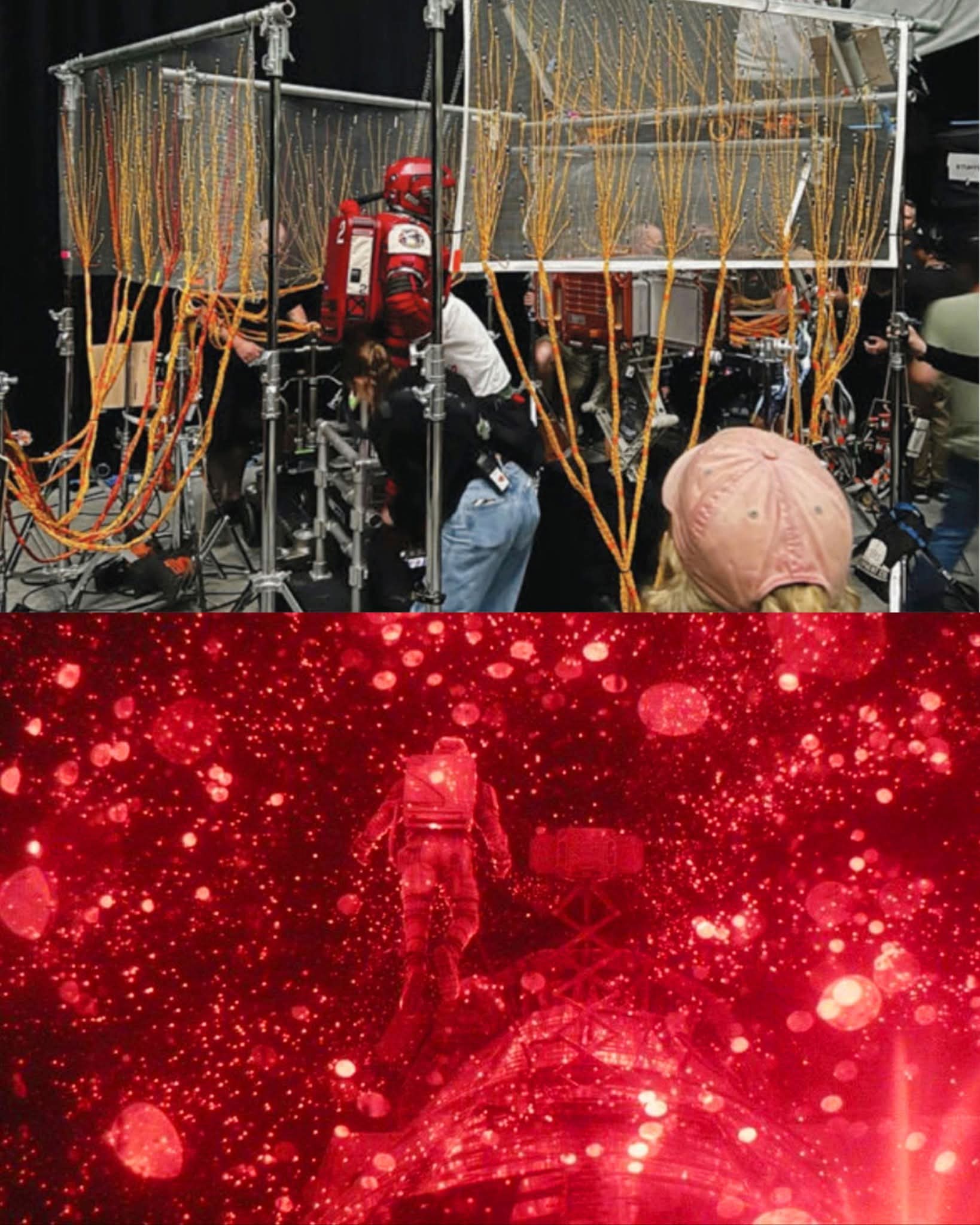
Project Hail Mary : technique!
Apr 14 2026
Project Hail Mary currently a box office success film appreciated for its innovative visual scheme cinematography by Greg Fraser.

Project Hail Mary – Cinematography Breakdown (Greig Fraser ACS ASC)
To create the vastness of space surrounding the spacecraft and the alien planet Adrian, the production combined ILM’s visual effects with a large-scale practical spaceship set, allowing for grounded physical interaction.
Actor Ryan Gosling was suspended on wires to realistically simulate zero gravity movement, giving the performance a natural spatial behavior that VFX alone cannot achieve.
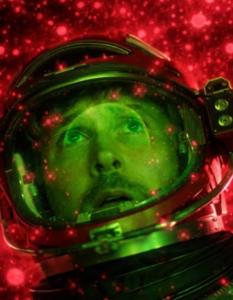
Infrared Imaging & Alexa 65 Approach
Cinematographer Greig Fraser ACS ASC employed the ARRI ALEXA 65, modifying its standard configuration by removing infrared (IR) filtration.
This allowed the sensor to capture near-infrared wavelengths, resulting in:
Subtle color contamination shifts
A distinct otherworldly tonal response
Enhanced separation of materials not visible in normal spectrum imaging
To further exploit this, the team designed a custom lighting rig:
A cage embedded with blinking infrared LEDs
Invisible to the human eye on set
But rendered on camera as soft pink bokeh highlights
This technique created a visual language for alien space, suggesting wavelengths beyond human perception—without relying purely on CGI.
Textural Cinematography – “Wet Space” Feel
For specific sequences, Fraser introduced an experimental handheld glass rig:
Water was poured between two layers of glass
Shot through using a handheld setup
Result: a smeared, fluid, refracted image texture
This gave certain moments a visceral, organic distortion, contrasting with the otherwise controlled precision of space imagery.
Lens & Format Strategy
The film was primarily captured on the ARRI ALEXA 65, paired with a curated mix of lenses:
Fraser used aspect ratio as a narrative tool:
1.43:1 IMAX → Expansive, immersive space sequences
2.39:1 anamorphic → Memory, intimacy, and human perspective
This shift in format subtly guides the audience between scale and subjectivity.
Key Insight
Rather than portraying space as clean and clinically perfect, Fraser’s approach introduces:
Imperfection
Spectral ambiguity
Textural depth
The result is a visual experience that feels less like observing space—and more like perceiving the unknown.
Optical Experimentation – Low-Cost, High Impact
Alongside large-format cameras and bespoke anamorphic lenses, Greig Fraser also embraced inexpensive rainbow diffraction filters, reportedly sourced from consumer platforms like Amazon.
Rather than relying solely on post-production effects, these filters were used in-camera to introduce:
Prismatic light streaks
Subtle spectral flares
Color separation across highlights
Why This Matters
This choice reflects a key philosophy:
Advanced cinematography is not about expensive tools alone—but about how creatively you manipulate light.
By combining:
ARRI ALEXA 65 (top-tier imaging)
With simple diffraction filters (low-cost tools)
Fraser achieves a layered image that feels:
Organic
Unpredictable
Physically grounded
Visual Function in the Film

The rainbow filters help:
Break the “clean perfection” of digital space imagery
Introduce a cosmic, refracted quality to light
Suggest unknown physics and environment
They work beautifully alongside:
Infrared lighting techniques
Anamorphic optics
Glass-and-water distortion
A powerful lesson here:
Don’t wait for expensive gear
Experiment with available tools
Even a simple filter can create a signature visual identity
Article by
CJ Rajkumar
Author/ Cinematographer
–