
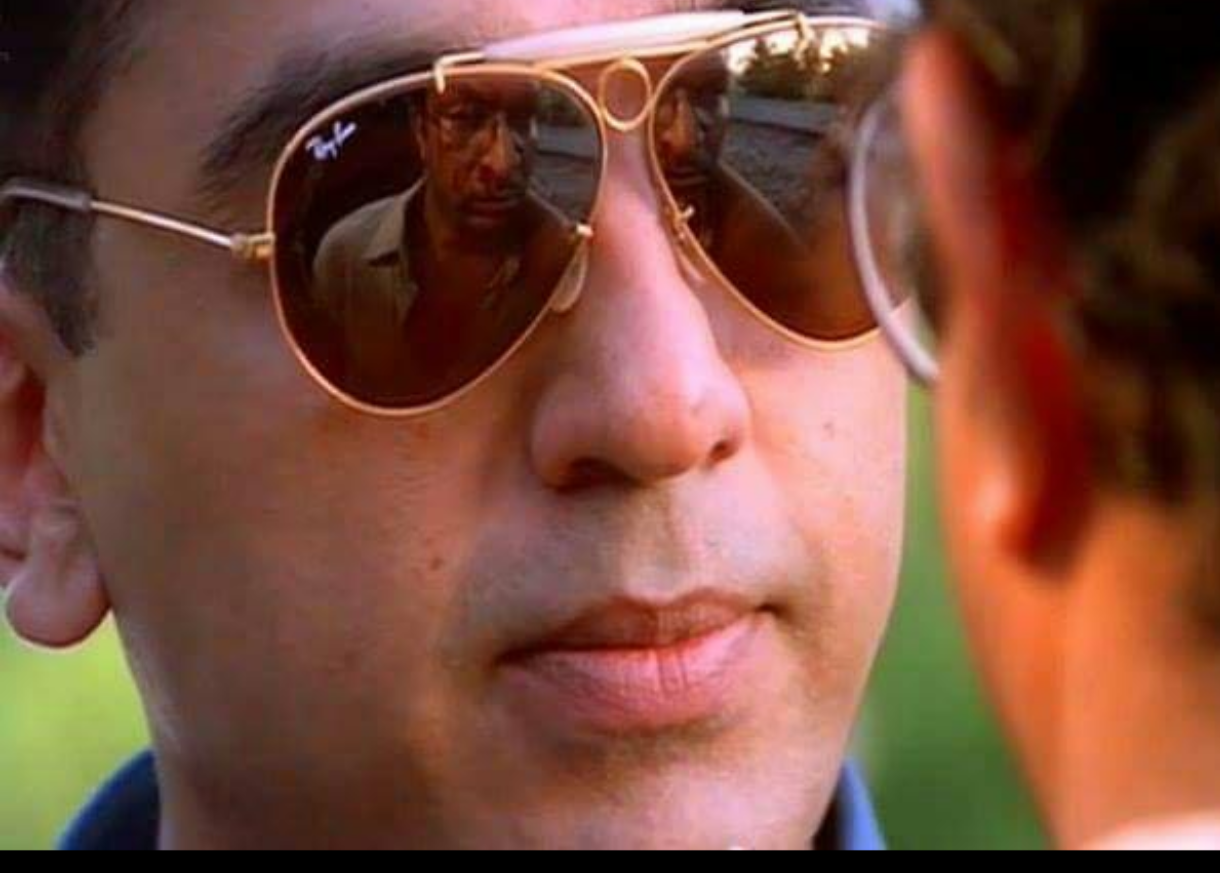
Kamal Haasan: a phenomenon
Nov 07 2026
KAMAL HAASAN – THE ARTIST WHO WAS ALWAYS AHEAD OF HIS TIME
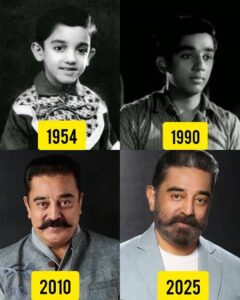
An Actor, Auteur & Innovator of Cinema
By CJ Rajkumar
Indian cinema has witnessed several generations of actors. Some have mesmerised audiences with their performances, some have established themselves through commercial success, while a few have transformed the very language of filmmaking through their creative vision.
Kamal Haasan belongs to that rare category of artists who have accomplished all three.
To describe Kamal Haasan merely as an actor would be an injustice to his extraordinary contribution to cinema. He is an actor, dancer, screenwriter, director, producer, singer, choreographer, technician and, above all, a passionate filmmaker who has constantly explored the possibilities of the cinematic medium.
His journey has been filled with remarkable successes, unexpected failures, bold experiments and creative risks. Yet, what distinguishes him from many others is his refusal to remain within the comfort zone of established success.
He has always wanted to explore what cinema could become.

From Child Artist to a Complete Performer
Kamal Haasan’s cinematic journey began remarkably early. His performance in A. Bhimsingh’s Kalathur Kannamma (1960) earned him the President’s Gold Medal, marking the arrival of an extraordinary child artiste.
However, the transition from a successful child artiste to an adult performer was not easy. During his teenage years, opportunities became limited. Despite his abilities in music and dance, he had to struggle to find meaningful roles.
He even worked as an assistant choreographer under dance master Thangappan, learning the discipline of filmmaking from behind the camera. He had the opportunity to assist in choreographing performances for legendary stars such as M.G. Ramachandran, Sivaji Ganesan and Jayalalithaa.
This period was important in shaping his understanding of cinema beyond acting.
His association with director K. Balachander transformed his career. Films such as Arangetram, Apoorva Raagangal, Manmadha Leelai and Nizhal Nijamagiradhu provided him with challenging characters and established him as a promising performer.
Balachander’s school of filmmaking helped Kamal understand characterisation, emotional complexity and the importance of natural performance.
He was no longer just a handsome young hero. He was becoming an actor who could transform himself for every character.
The Emergence of a Giant Artist
The late 1970s and early 1980s witnessed a significant transformation in Tamil cinema. New filmmakers such as Bharathiraja, Balu Mahendra, Mahendran and Rudhraiya were introducing fresh cinematic narratives and visual sensibilities.
Kamal became an integral part of this creative movement.
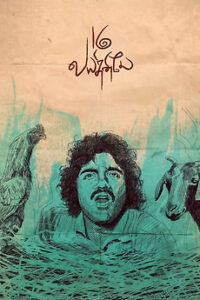
His portrayal of Chappani in Bharathiraja’s 16 Vayathinile was a remarkable departure from conventional heroism. He completely surrendered his physical appearance, body language and mannerisms to create an unforgettable rural character.

His performances in Kokila, Ilama Oonjal Aadukirathu, Aval Appadithan, Sigappu Rojakkal and Maro Charitra demonstrated his extraordinary versatility.
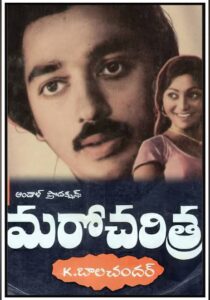
Maro Charitra, directed by K. Balachander, became a major success and proved that powerful emotions could transcend language barriers.
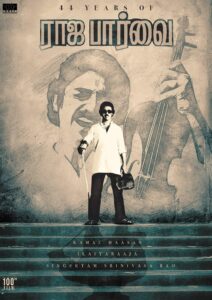
Then came Raja Paarvai, Moondram Pirai and Salangai Oli.
In Moondram Pirai, his portrayal of a man emotionally attached to a woman suffering from memory loss remains one of the finest performances in Indian cinema.
In Salangai Oli, he brought together his passion for classical dance and his understanding of human emotions to create a deeply moving character.
These films established Kamal Haasan as an actor of exceptional depth.
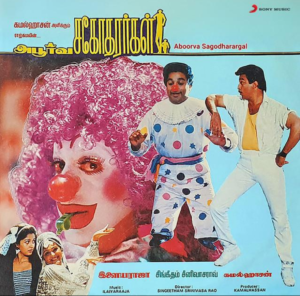
Apoorva Sagodharargal – Redefining Physical Transformation
One of the most extraordinary achievements in Kamal Haasan’s career was Apoorva Sagodharargal (1989), directed by Singeetam Srinivasa Rao.
The film presented Kamal in a challenging dual role, particularly as Appu, a dwarf.
Creating a convincing dwarf character without today’s advanced digital technologies was an enormous technical challenge.
Kamal physically transformed himself by adopting a specialised walking technique, bending his legs and moving on his knees. Camera perspectives, specially designed footwear, set construction and carefully planned visual compositions contributed to the illusion.
This was not simply an acting achievement. It was a remarkable combination of physical performance, cinematography, production design and visual ingenuity.
The distinction between Raja and Appu was not limited to their physical appearances. Their body language, movements, expressions and emotional responses were entirely different.
Kamal made the audience forget the technical effort behind the character and emotionally connect with Appu.
That is the real achievement of cinematic illusion.
Even today, Apoorva Sagodharargal stands as an important reference for practical visual effects and character transformation in Indian cinema.

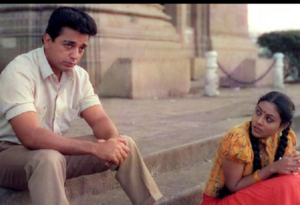
Nayakan – The Defining Turning Point
Mani Ratnam’s Nayakan (1987) was arguably the defining moment in Kamal Haasan’s cinematic journey.
Inspired in part by the cinematic world of Francis Ford Coppola’s The Godfather, the film explored the life of Velu Naicker, a man whose journey from childhood to old age was shaped by violence, power, family and circumstances.
Kamal’s transformation across different stages of life was extraordinary.
The ageing makeup, physical deterioration, changing voice, subtle expressions and emotional maturity demonstrated his understanding of character beyond conventional acting.
The famous question, “Neenga Nallavara Kettavara?” became an iconic cinematic moment because of the emotional complexity he brought to the character.
In many ways, Kamal’s career can be divided into two phases: Before Nayakan and After Nayakan.
His subsequent choices became increasingly ambitious.
Satya explored urban anger and youth frustration. Apoorva Sagodharargal combined commercial entertainment with technical innovation. Michael Madana Kama Rajan showcased his extraordinary ability to portray four distinct characters. Gunaa explored obsession and unconventional love.
Each film revealed another dimension of his artistic personality.

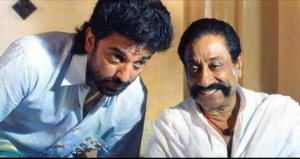
The Cinematic Visionary – Thevar Magan, Mahanadhi and Hey Ram
Thevar Magan (1992), directed by Bharathan, was a landmark in Kamal’s screenwriting career.
Working alongside the legendary Sivaji Ganesan, Kamal explored generational conflict, family traditions, rural power structures, violence and social relationships.
The screenplay’s layered characterisation and dramatic progression made it one of the most influential Tamil films of its period.
Then came Mahanadhi (1994), one of the most emotionally powerful films in his career.
The story of an ordinary man whose life is destroyed by circumstances was narrated with extraordinary sensitivity.
The film explored corruption, imprisonment, family separation, child trafficking and the vulnerability of ordinary people.
Kamal’s performance as Krishna brought out the pain of a father, the desperation of a helpless man and the emotional strength of someone fighting against injustice.
It was also an important technical milestone, being among the early Indian films to adopt AVID digital editing workflows.
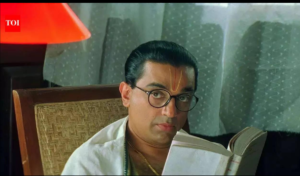
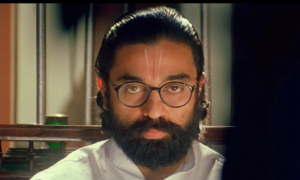
Hey Ram (2000) was another ambitious cinematic undertaking.
Through a deeply personal narrative, Kamal explored the Partition, communal violence, political extremism, Gandhi and the psychological consequences of hatred.
Influenced by literary works and historical perspectives, the film was much more than a conventional period drama.
Although it did not achieve the expected commercial success upon release, it has since earned considerable appreciation for its ambition, visual language and narrative complexity.
Kuruthipunal – A Landmark in Cinematic Sound and Visual Realism
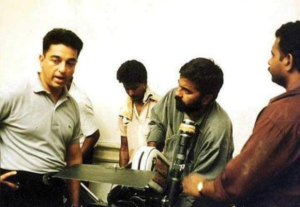
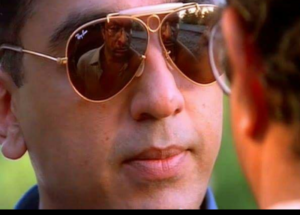
As a cinematographer, I consider Kuruthipunal (1995), directed by cinematographer P.C. Sreeram, one of the most significant technical milestones in Indian cinema.
Starring Kamal Haasan, Arjun and Nassar, the film presented a completely different visual and auditory experience from conventional action films of that period.
Its approach to cinematography was strikingly modern.
P.C. Sreeram’s controlled lighting, camera placement, composition and realistic visual treatment created an intense atmosphere. The camera was not merely recording action; it was participating in the storytelling.
But what made Kuruthipunal particularly remarkable was its sound design.
The film is widely recognised as the first Indian film to use Dolby Stereo Surround SR technology.
The soundscape transformed the theatrical experience. Gunshots, explosions, environmental sounds and spatial effects created an extraordinary sense of realism.
The powerful explosion sequences, with their cannon-like impact, demonstrated how sound could become an integral part of cinematic storytelling rather than simply accompanying the visuals.
For Indian audiences, this was a significant step towards experiencing cinema through immersive theatrical sound.
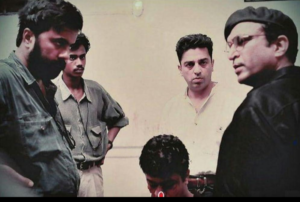
The collaboration between Kamal Haasan and P.C. Sreeram demonstrated a shared commitment to technical excellence and cinematic realism.
For me, Kuruthipunal remains an important reference point when discussing the evolution of cinematography and sound in Indian cinema.
A Technology Enthusiast Who Anticipated the Future
Kamal Haasan’s fascination with technology deserves special attention.
Long before digital filmmaking became commonplace in India, he was exploring new production methods and encouraging filmmakers to experiment with emerging technologies.
His film Vikram (1986) reflected his interest in contemporary technology, futuristic storytelling and electronic music production.
In Thevar Magan, the use of Movie Magic screenplay software reflected his interest in computer-assisted screenwriting.
Mahanadhi explored early digital editing workflows through AVID technology, demonstrating his interest in transforming post-production practices.
Kuruthipunal introduced an important new dimension to theatrical sound through Dolby Stereo Surround SR & Canon blast stunt sequences.
In Indian (1996), the extensive prosthetic makeup used to create the elderly Senapathy character was a significant achievement. The transformation was not merely cosmetic; it helped establish an entirely different physical identity for the character.
Aalavandhan (2001) explored animation, visual effects and unconventional visual storytelling. Its animated sequences were unusual for mainstream Indian cinema at the time.
Virumaandi (2004) experimented with live sound recording, adding a naturalistic quality to the performances and environments.
Mumbai Xpress (2005) was another early digital filmmaking experiment, reflecting his willingness to embrace emerging production technologies.
With Vishwaroopam (2013), Kamal took the theatrical audio experience further through AURO-3D immersive sound technology.
These experiments demonstrate his willingness to embrace technology even when the industry was not fully prepared for it.
For Kamal, technology was never merely a promotional feature. It was another creative instrument.

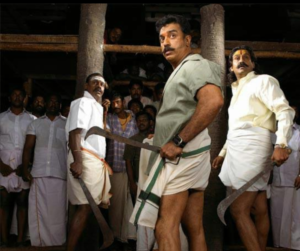
The Director and Screenwriter
Kamal’s achievements as a filmmaker are equally significant.
His directorial vision and screenplay contributions reveal an artist who constantly seeks alternative ways of telling stories.
Virumaandi (2004) is a particularly interesting example.
The film uses multiple perspectives to narrate the same sequence of events, allowing the audience to understand how truth can change depending on the person telling the story.
This narrative structure, often associated with the Rashomon approach, made the film an intellectually engaging cinematic experience.
Anbe Sivam explored humanity, compassion, ideology and the meaning of love through the relationship between two contrasting individuals.
It was not merely a philosophical film. It was an emotional exploration of human relationships.
Vishwaroopam attempted to combine international espionage, geopolitical tensions, action filmmaking and technical sophistication.
Kamal’s ambitions were clearly beyond the limitations of conventional Tamil commercial cinema.
Not all these films achieved commercial success. Some were ahead of their time, while others were misunderstood or underappreciated during their initial release.
But they remain important examples of his creative ambition.

Vikram (2022) – A Superstar Reconnects with a New Generation
Perhaps the most fascinating chapter in Kamal Haasan’s recent career is Vikram (2022), directed by Lokesh Kanagaraj.
After a period away from mainstream acting, Kamal returned with a film that connected powerfully with an entirely new generation of audiences.
What makes Vikram particularly significant is not just its enormous box-office success, but the way Kamal understood and embraced the changing language of contemporary commercial cinema.
He allowed a younger filmmaker to bring his own cinematic vision to the project while retaining the charisma and screen presence that generations of audiences associate with Kamal Haasan.
The combination of Kamal Haasan, Vijay Sethupathi and Fahadh Faasil created an exciting cinematic universe. Suriya’s spectacular appearance as Rolex added another dimension to the film.
Vikram became an industry hit and crossed the ₹400-crore mark worldwide, establishing itself as one of the biggest Tamil blockbusters of its time.
It was a remarkable achievement for an actor whose career had already spanned more than six decades.
More importantly, it proved that Kamal was not merely a legend remembered by older generations. He could still command the attention of young audiences and deliver a contemporary blockbuster.
The success of Vikram also demonstrated his ability to recognise new talent, collaborate with younger filmmakers and adapt to changing audience expectations.
That is the mark of a truly enduring superstar – the ability to reinvent oneself without losing one’s identity.
The Self-Critic – An Artist Who Never Stops Learning
Kamal Haasan has never been immune to criticism.
Films such as Aalavandhan, Hey Ram and Mumbai Xpress did not achieve the commercial results expected of them.
There have also been debates about the influences of international cinema in some of his films.
But what makes Kamal different is his willingness to examine his own work critically.
He has often expressed dissatisfaction with his performances and acknowledged that not every film in his career represents his true artistic potential.
That attitude is perhaps one of the most important reasons behind his longevity.
Many actors become comfortable with success. Kamal has repeatedly challenged himself, even at the risk of failure.
He has never been afraid to experiment with unfamiliar genres, unconventional characters or new production technologies.
His greatest strength is not that he has always been right, but that he has always been willing to try.
Kamal Haasan – A University of Cinema
Looking back at Kamal Haasan’s extraordinary career, one realises that his contribution cannot be measured merely through the number of films he has acted in, the awards he has received or the box-office records he has created.
He represents an entire education in filmmaking.
For an actor, his films are lessons in characterisation and physical transformation.
For a cinematographer, they offer opportunities to study composition, lighting, camera movement and visual storytelling.
For an editor, they reveal the importance of rhythm, narrative structure and emotional continuity.
For a sound designer, they demonstrate how sound can shape the audience’s experience.
For a filmmaker, they provide valuable lessons in screenplay construction, experimentation and creative risk-taking.
His collaborations with directors and technicians such as K. Balachander, Balu Mahendra, Mani Ratnam, Singeetam Srinivasa Rao and P.C. Sreeram have produced some of the most memorable chapters in Indian cinema.
He has learned from great filmmakers, contributed to their visions and continuously developed his own cinematic language.
As a cinematographer and educator, I find his journey particularly inspiring because he has never considered filmmaking to be the responsibility of the director alone.
He understands cinema as a collective art form in which every department contributes to the final experience.
His curiosity about technology, his respect for the craft and his willingness to explore new possibilities make him an extraordinary example for aspiring filmmakers.
The Legacy Beyond Stardom
Kamal Haasan is not simply a product of a particular generation. He has influenced several generations of actors, directors, cinematographers and technicians.
His career demonstrates that an actor need not remain confined to the boundaries of performance. An actor can become a complete filmmaker, understand every department and actively contribute to the evolution of the medium.
Some of his films succeeded commercially. Some failed. Some were ahead of their time. Some acquired greater appreciation decades after their release.
But his creative journey has never been static.
The greatest achievement of Kamal Haasan is not just the characters he has portrayed or the records he has created. It is the fact that he has consistently expanded the possibilities of what an Indian actor and filmmaker can aspire to become.
He is an actor, an auteur, an innovator and an institution.
A living university of cinema.
From the innocent child in Kalathur Kannamma to the contemporary phenomenon of Vikram, his journey is a celebration of an artist who refuses to stop learning, experimenting and reinventing himself.
Kamal Haasan is not merely an icon of Tamil cinema. He is one of the enduring symbols of Indian cinema’s creative ambition.
Kamal Haasan – Major Awards and Honours
A distinguished record of excellence in Indian and International Cinema
Kamal Haasan is among the most decorated actors in Indian cinema. His awards recognise not only his acting but also his contributions as a filmmaker, screenwriter, producer and creative innovator.
National Film Awards – 5 Awards
* 1961 – Best Child Artist: Kalathur Kannamma
* 1983 – Best Actor: Moondram Pirai
* 1988 – Best Actor: Nayakan
* 1993 – Best Feature Film in Tamil (as producer): Thevar Magan
* 1997 – Best Actor: Indian
Filmfare Awards – 21 Awards
Kamal Haasan has won 21 Filmfare Awards across five languages, including 18 Best Actor awards.
Some of his notable award-winning performances include:
* Apoorva Raagangal
* Oru Oodhappu Kan Simittugiradhu
* 16 Vayathinile
* Sigappu Rojakkal
* Varumayin Niram Sivappu
* Raja Paarvai
* Sagara Sangamam
* Swathi Muthyam
* Pushpaka Vimana
* Gunaa
* Thevar Magan
* Kuruthipunal
* Indian
* Hey Ram
* Vikram
His 2023 Filmfare Award for Best Actor for Vikram demonstrated his continuing relevance across generations.
. Padma Awards – Government of India
* 1990 – Padma Shri
* 2014 – Padma Bhushan
These are among India’s highest civilian honours.
4\. Tamil Nadu State Awards and Honours
* 1978 – Kalaimamani Award
* 1989 – M.G.R. Award
* 1999 – Sivaji Ganesan Award
He has also received several Tamil Nadu State Film Awards for performances in films including 16 Vayathinile, Varumayin Niram Sivappu, Moondram Pirai, Apoorva Sagodharargal, Thevar Magan, Indian, Vettaiyaadu Vilaiyaadu and Dasavathaaram.
International Honours
* 2016 – Chevalier de l’Ordre des Arts et des Lettres, Government of France.
* 2016 – Henri Langlois Award, France, recognising his contribution to cinema.
* 2004 – Best Asian Film, Bucheon International Fantastic Film Festival, South Korea, for Virumaandi.
* 2015 – Los Angeles Independent Film Festival Awards: Multiple awards for Uttama Villain, including Best Picture, Best Actor, Best Screenplay and Best Song. Wikipedia +1
Nandi Awards – Andhra Pradesh
Some of his recognised performances include:
* Sagara Sangamam
* Swathi Muthyam
* Indrudu Chandrudu
He has received multiple Nandi Awards for his contributions to Telugu cinema. Wikipedia +1
Other Major Awards and Recognition
* 2005 – A.T. Kovoor National Award: Recognition for secular and humanist contributions.
* 2005 – Honorary Doctorate: Sathyabama University, Chennai.
* 2009 – CNN-IBN Indian of the Year Special Award: For completing 50 years in cinema.
* 2010 – Government of Kerala Honour: Recognition of 50 years in Indian cinema.
* 2019 – Honorary Doctorate: Centurion University.
* 2022 – SIIMA Original Pan-India Superstar Award.
* 2023 – SIIMA Best Actor: Vikram.
* 2025 – Golden Beaver Award: Indian Film Festival of Alberta, Canada.
* 2026 – Paidipati Jairaj Award: Government of Telangana, recognising his contribution to Indian cinema.
International Recognition Beyond Awards
* Nayakan was included in TIME magazine’s 100 greatest films of all time.
* Seven films featuring him were selected as India’s official submissions for the Academy Awards’ Best International Feature Film category: Saagar, Swathi Muthyam, Nayakan, Thevar Magan, Kuruthipunal, Indian and Hey Ram.
* In 2025, he was invited to join the Academy of Motion Picture Arts and Sciences.
His recognition extends across acting, filmmaking, screenwriting, production and technological innovation.
By CJ Rajkumar Cinematographer | Author |