
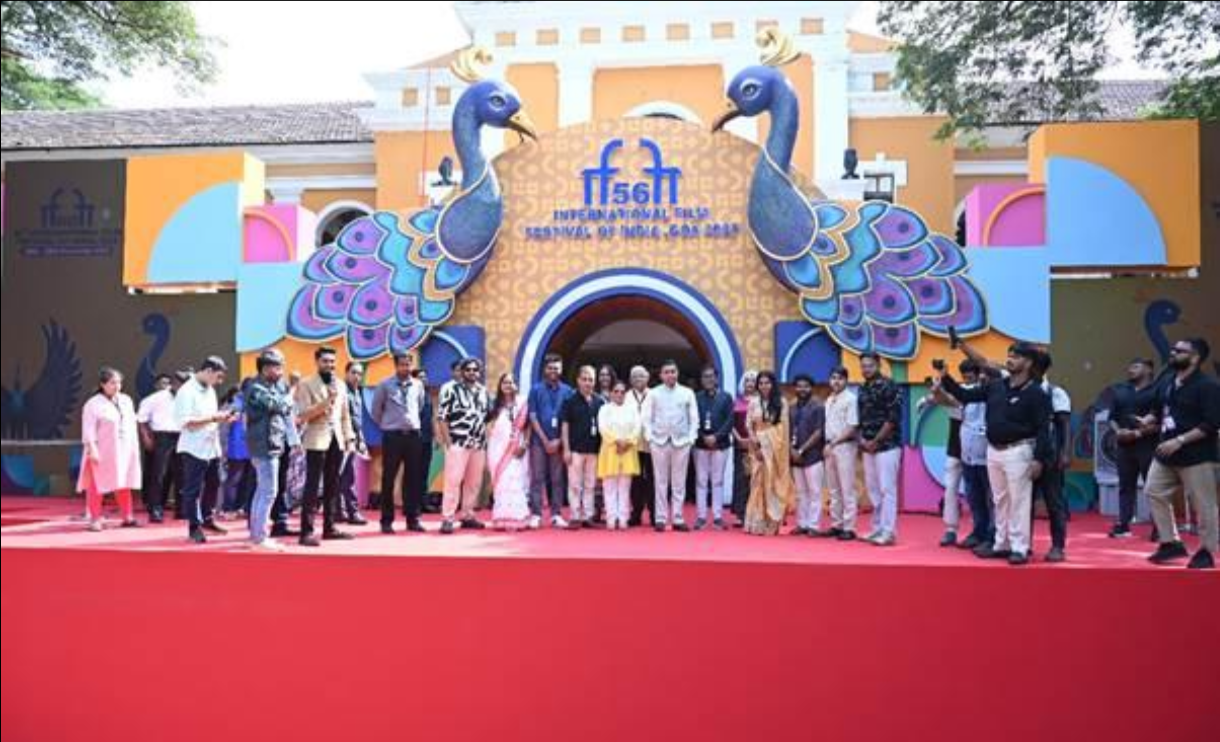
IFFI 2026 : Goa!
Nov 15 2026
57th IFFI Goa 2026: Stories Without Borders – A Global Celebration of Cinema
From international cinematic masterpieces to India’s diverse regional storytelling, the 57th International Film Festival of India brings together filmmakers, cinematographers, emerging talent and cinema enthusiasts for a nine-day celebration of world cinema.
The 57th edition of the International Film Festival of India (IFFI) 2026 is scheduled to take place in Panaji, Goa, from November 20 to 28, 2026. Under the theme “Stories Without Borders, this year’s festival celebrates cinema as a universal language that transcends geographical boundaries, cultural differences and linguistic barriers.
With 159 international films representing 86 countries and 76 Indian films across 18 languages, IFFI 2026 promises an extensive cinematic experience for filmmakers, directors, cinematographers, technicians, students, critics and film enthusiasts.
Filmmaker Ashutosh Gowariker leads the festival as its director. The event brings together established filmmakers, emerging directors, technical professionals, film institutions and the next generation of cinema practitioners.

International Cinema: Stories from 86 Countries
One of the major attractions of IFFI 2026 is its international selection, featuring 159 films from 86 countries.
The selection reflects the diversity of contemporary world cinema, bringing together different filmmaking traditions, cultural perspectives, visual approaches and narrative styles.
The three major festival presentations are:
– Opening Film – Fatherland:Directed by Paweł Pawlikowski.
– Mid-Fest Film – I Matter: Directed by Alina Șerban.
– Closing Film – We Are All Strangers: Directed by Anthony Chen.
These selections bring different cinematic voices and perspectives to the festival, offering audiences an opportunity to experience stories that move beyond national and cultural boundaries.
The theme “Stories Without Borders” is particularly relevant to contemporary cinema, where filmmakers increasingly explore universal subjects through distinctive regional identities and cultural experiences.

International Competition: The Golden Peacock
The International Competition remains one of IFFI’s most prestigious sections. It brings together films from different countries, allowing filmmakers to compete for the coveted Golden Peacock.
The jury is chaired by filmmaker Aanand L. Rai, with members Sol Berruezo Pichon, Ratchapoom Boonbunchachoke, María Alejandra Rojas and Bogdan Mureșanu.
The competition provides a platform for distinctive cinematic voices and encourages artistic experimentation, innovative storytelling and strong directorial vision.

For filmmakers, the importance of such a competition lies not only in awards but also in the opportunity to have their work viewed and evaluated by an international filmmaking community.
Best Debut Feature Films: Encouraging the Next Generation
A particularly interesting section of IFFI 2026 is the Best Debut Feature Films Competition, featuring seven films from different countries.
The selected films are:
– The Sledge – India
– Birds on Ice – India
– Fading Man – Germany
– Paris – Belgium
– The Black Sea – Egypt
– L’Âge d’Or (The Golden Age) – France and Italy
– Atlantic – China
The inclusion of Indian films such as The Sledge and Birds on Ice is particularly noteworthy.
This section creates international visibility for first-time feature filmmakers. It recognises fresh voices, independent creative thinking and new approaches to cinematic storytelling.
For young filmmakers and film-school students, this competition demonstrates that cinema is not exclusively about established names or large production houses. Strong storytelling, creative conviction and an original filmmaking perspective can find a place on an international platform.
Indian Panorama 2026: Celebrating the Diversity of Indian Cinema
Indian Panorama is one of the most important components of IFFI. Established in 1978, the section showcases outstanding Indian films and promotes the country’s cinematic art, cultural heritage and regional storytelling traditions.
For 2026, the Indian Panorama selection features:
– 25 feature films, including 20 films in the general section and five in the mainstream category.
– 20 non-feature films, including documentaries, short films and other non-fiction cinematic works.
The selection process was highly competitive. The feature-film jury considered 404 submissions, while the non-feature jury evaluated 358 entries.
The feature-film jury was chaired by National Award-winning filmmaker Madhur Bhandarkar, with a 12-member panel. The non-feature jury was chaired by filmmaker and educationist Himanshu Sekhar Khatua, with six members.
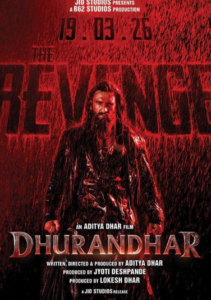
Opening Films
Opening Feature Film – Dhurandhar
Language: Hindi
Director: Aditya Dhar
Selected to open the Indian Panorama feature-film programme, Dhurandhar represents the mainstream cinema category.
Opening Non-Feature Film – Becoming
Language: Ladakhi
Director: Leena Yadav
Becoming has been selected to open the non-feature-film programme.
Notable Indian Panorama Feature Selections
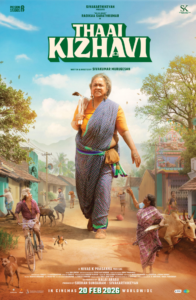
The feature-film selection brings together a wide range of Indian languages and cinematic traditions.
Tamil Cinema
– Scroll – Directed by Kannan S.
– Thaai Kizhavi – Directed by Sivakumar Murugesan.
Malayalam Cinema
– Sarvam Maya – Directed by Akhil Sathyan.
Kannada Cinema
– Ruby-Cube – Directed by P. Sheshadri.
Telugu Cinema
– Sing Geetham – Directed by Singeetham Srinivasa Rao.
– Mana Shankara Vara Prasad Garu – Directed by Anil Ravipudi.
Other Notable Selections
– Kantara: A Legend Chapter 1 – Rishab Shetty.
– Paro – Gajendra Ahire.
– Banaras – Bharatbala Ganapathy.
– Birds on Ice – Sahil Shah.
Mainstream Cinema Section
The mainstream cinema category features films that have made a significant impact through their scale, storytelling and audience reach.
Notable selections include:
– Kantara: A Legend Chapter 1 – Kannada, directed by Rishab Shetty.
– Mana Shankara Vara Prasad Garu – Telugu, directed by Anil Ravipudi.
– Dhurandhar – Hindi, directed by Aditya Dhar.
The presence of mainstream productions alongside independent and regional films reflects the effort to recognise different dimensions of Indian cinema.
Non-Feature Cinema: Documentaries, Short Films and New Perspectives
The non-feature section is equally important because it provides a platform for documentary filmmakers, independent creators and artists working outside conventional feature-film formats.
Twenty films have been selected from 358 submissions.
The selection includes films exploring social realities, cultural identities, education, history, human experiences and contemporary issues.
One of the significant Indian selections is Attappadi a Tamil non-feature film directed by Vijeesh Mani.
Other selections include:
– The Unseen Holy River – Saraswati
– Becoming
– Shat-Shat Atal
– The Hug of Emptiness
– Red Carpet
– Demography is Destiny
– Win
– Nirmanjali: The Chandigarh of Maciej Nowicki
– Naqsh-e-Daur
– Switch Off
– Kathar Katha
The selection demonstrates that meaningful cinema is not restricted to feature-length narratives. Documentaries and short films can offer powerful perspectives on communities, social change, identity and cultural memory.
SICA Representation: Recognition of Cinematographers in Indian Panorama
One of the notable aspects for the South Indian film fraternity is the reported representation of members of the Southern India Cinematographers’ Association (SICA) in connection with the Indian Panorama jury panels.

The cinematography professionals mentioned are:
– Ravindhar
– M. S. Prabhu
– K. S. Sivaraman
Their association with the jury process is noteworthy for the cinematography community.
Film selection is a multidimensional exercise. While the director’s vision, screenplay, performances and editing are essential, the visual language of a film also plays a major role in its cinematic identity.
The participation of experienced cinematography professionals in film evaluation highlights the importance of technical and visual excellence in the larger appreciation of cinema.
BRICS Cinema: A Global Platform for Cultural Exchange
IFFI 2026 places special emphasis on BRICS cinema, bringing together filmmaking traditions from BRICS member countries and partner nations.
The BRICS section will open with India’s Ramayanadirected by Nitesh Tiwari.
The programme offers an opportunity to understand how different nations interpret mythology, history, social change, family relationships and contemporary life through cinema.
It also creates possibilities for international co-productions, creative collaborations and cultural exchange.
Spain and Russia: Special Country Showcases
Spain features as the Country of Honour, with a showcase of four films representing its distinctive cinematic traditions.
Russia participates as the Partner Country, presenting four films that offer audiences an opportunity to explore its filmmaking culture and evolving creative landscape.
These special programmes allow audiences to experience filmmaking traditions beyond familiar international markets and encourage a deeper appreciation of different cinematic languages.
New Sections: Animation and Films About Films
Two interesting additions to the 57th edition are Animation and Films About Films.
Animationwill showcase five films celebrating animation as an independent cinematic art form. The section recognises the creative possibilities of animation, visual imagination and new forms of storytelling.
Films About Films will present five films exploring cinema itself and the art and craft of filmmaking.
This is an especially interesting addition for film students, cinematographers, editors, directors and film enthusiasts. Films about filmmaking can offer insights into creative processes, production challenges and the relationship between artistic vision and technical execution.
WAVES Film Bazaar: Connecting Creativity with the Film Industry
An important industry component associated with IFFI is WAVES Film Bazaar.
Unlike conventional film screenings, a film market creates opportunities for the business and professional development of cinema.
It provides a meeting point for:
– Film producers and directors.
– Independent filmmakers.
– International distributors.
– Sales agents and acquisition professionals.
– OTT platforms.
– Film financiers.
– Scriptwriters and creative entrepreneurs.
For independent filmmakers, such platforms can be valuable in presenting projects, finding production partners, exploring distribution opportunities and understanding the international business of cinema.
The significance of IFFI extends beyond the number of films being screened.
Indian cinema is undergoing a period of considerable transformation. Regional films are increasingly reaching national and international audiences. New technologies are changing production methods, while independent filmmakers are exploring fresh narrative possibilities.
Cinema speaks many languages, but its emotions are universal.
Article by
CJ Rajkumar
Author/ Cinematographer