
Cure with Light: New scientific way!
Oct 22 2026
Optogenetics: Controlling the Brain with Light
When Optics Meets Neuroscience
By CJ Rajkumar
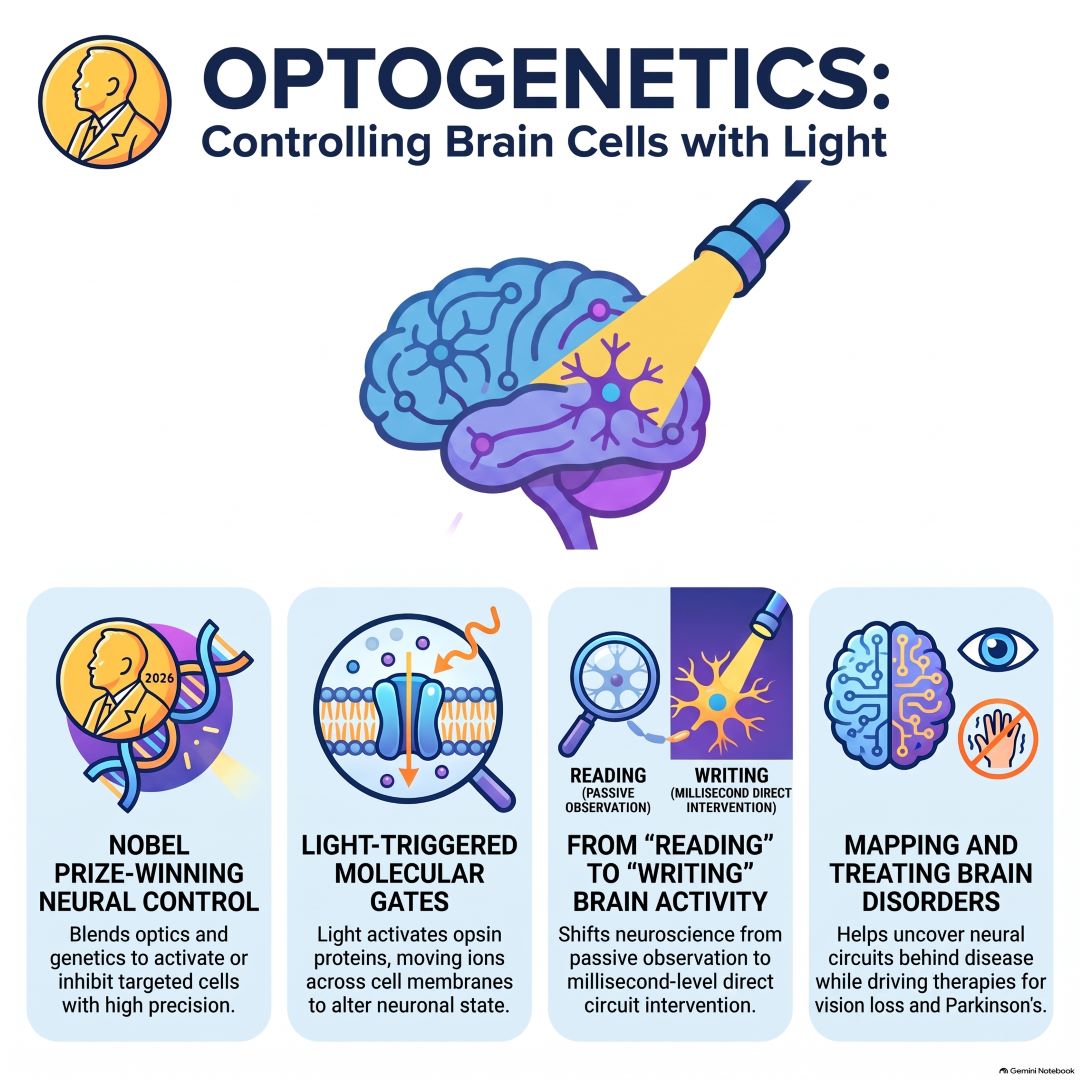
Light has transformed the way we capture images, explore the universe and understand the human body. Today, an exciting scientific technique called optogeneticsis enabling researchers to use light to control the activity of specific neurons in the brain.
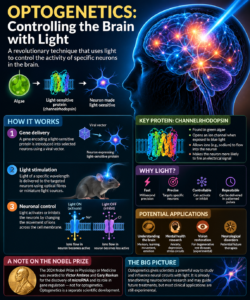
Optogenetics combines optics and genetics* The breakthrough came from the discovery of light-sensitive proteins such as channelrhodopsin, originally found in green algae. By introducing genes encoding these proteins into selected neurons, scientists can make those cells respond to particular wavelengths of light.
When illuminated, these proteins alter the movement of ions across cell membranes, changing the electrical activity of neurons. Using precisely controlled light pulses, researchers can activate or inhibit selected neural circuits and investigate their roles in memory, movement, perception, fear and emotion.
From Research to Medical Possibilities
Optogenetics has become a powerful tool for understanding how the brain functions. It is also inspiring research into neurological disorders and mental health conditions, including anxiety and depression. However, most psychiatric applications remain experimental, and optogenetics is not yet a routine replacement for medication or psychotherapy.
One promising area is vision restoration Researchers are investigating whether surviving retinal cells can be made sensitive to light in people who have lost photoreceptors because of degenerative eye diseases. Early clinical research has demonstrated proof of concept, although the technique remains specialised and does not restore normal vision in every case.
The Optical Connection
For cinematographers, optogenetics offers a fascinating perspective on light. In filmmaking, light shapes images through intensity, colour, direction and timing. In optogenetics, these same optical parameters become tools for delivering controlled biological stimuli.
The underlying mechanisms are different, but both disciplines demonstrate the importance of understanding how light interacts with the material it reaches.
The Future of Light
Optogenetics represents a remarkable convergence of optical engineering, genetics and neuroscience. It offers scientists a way to investigate the brain with unprecedented experimental precision and may help guide future medical treatments.
Light is no longer just a means of seeing; in optogenetics, it becomes a tool for understanding and influencing living systems.
Scientific note: The 2024 Nobel Prize in Physiology or Medicine was awarded to Victor Ambros and Gary Ruvkun for their discovery of microRNA and its role in gene regul
ation—not for optogenetics.