
FUJI GFX ETERNA 55 event!
Mar 16 2026
SICA Hosts Grand Screening of Kaathadi and Fujifilm ETERNA Presentation at Prasad Lab Theatre saligramam chennai.

The Southern India Cinematographers’ Association (SICA) hosted a grand technical and screening event at Prasad Labs on March 15, drawing an impressive turnout of cinematographers, technicians, students, and film enthusiasts.



The gathering was warmly welcomed by SICA office bearers including President A. Karthikraaja, General Secretary Ilavarasu and Treasurer Sakthi Saravanan, who addressed the audience and highlighted the importance of technological evolution in cinematography.



The event was graced by the presence of ace director and cinematographer Rajiv Menon, whose presence added prestige to the gathering. In his interaction with the community, discussions also touched upon the growing significance of large-format cinematography and the impact that formats like IMAX have had on modern visual storytelling.




A special felicitation was presented to cinematographer Shiva GRN for winning an International Award at the London Film Festival for the film Rasavathi, celebrating his achievement before the assembled cinematography community.
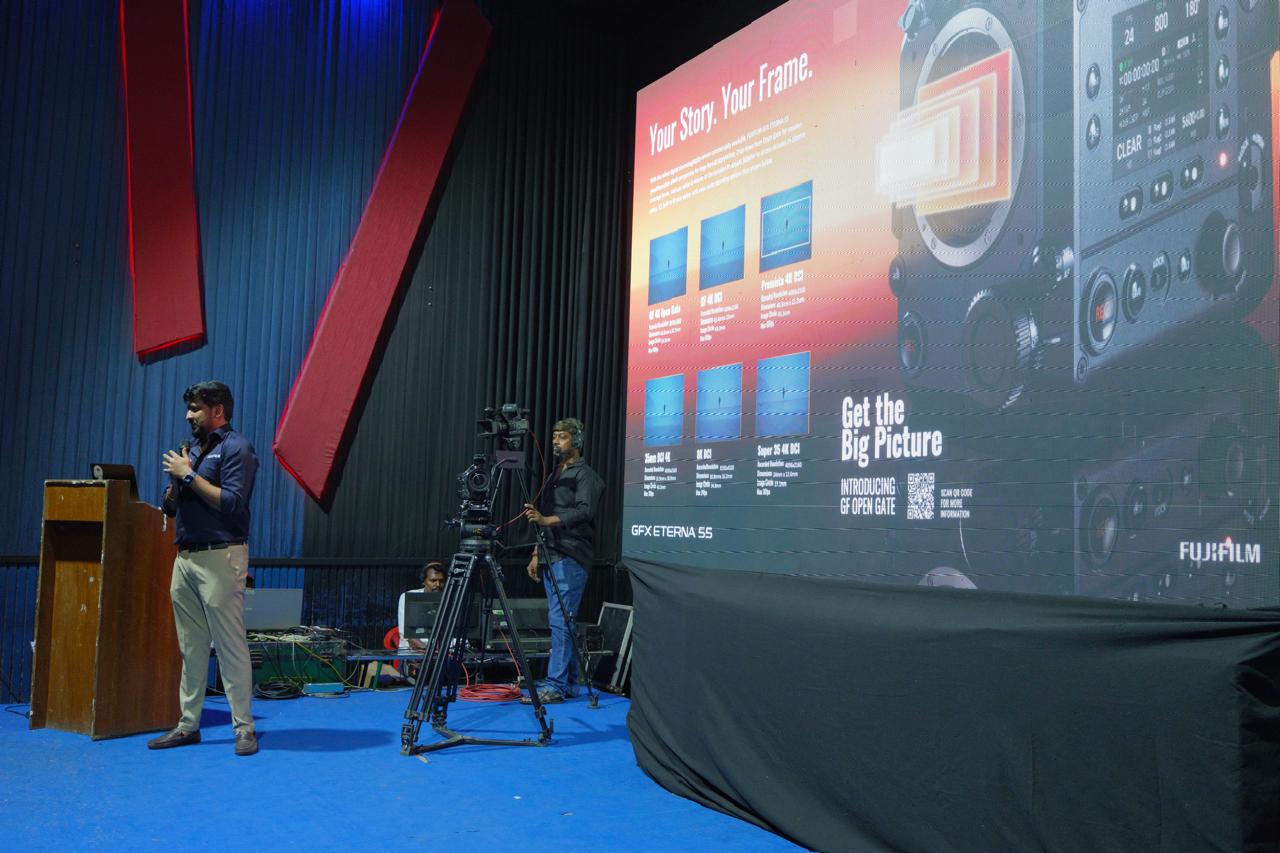
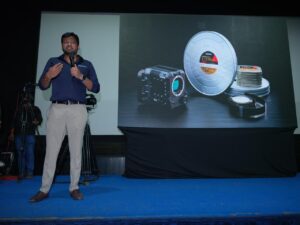
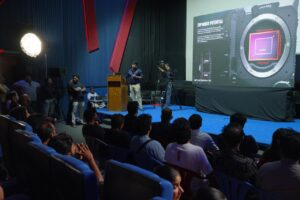
The Fujifilm team delivered an engaging technical presentation on the ETERNA large-format filmmaking camera. The session featured insights from Arun Babu, Hiroki Yokomizo, Sathya B, Ranjeet Chennampully, Vaibhav Tuteja, and Sourabh Joshi, who introduced the camera system and discussed its design philosophy and workflow advantages for contemporary cinema production.
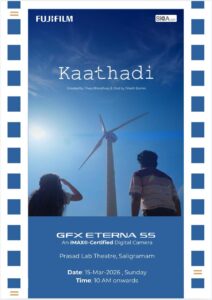

The highlight of the event was the screening of the short film Kaathadi, directed by Thejo Bharadwaj and cinematographed by Niketh Bommi, an alumnus of Mind Screen Film Institute and a rising cinematographer. The film received thunderous applause from the audience, with many appreciating its visual language and storytelling approach.



Following the screening, the entire crew of the film was present on stage and honoured, recognizing their creative contribution to the project. The session evolved into an interactive discussion where cinematographers and students engaged with the crew about the visual design and production process.


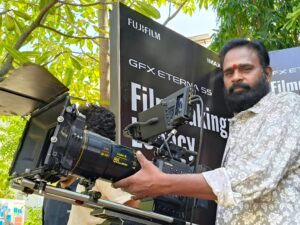
The event concluded with an enthusiastic hands-on session with the new camera system, where many cinematographers and technicians explored the equipment and interacted directly with the Fujifilm technical team.
Quick look at advantages of Fuji GFX eterna with Specification and features
FUJIFILM GFX ETERNA 55 – Cinema Camera (Key Specifications)
Sensor & Image
Sensor Type: Large-format CMOS (GFX 102MP CMOS II HS)
Sensor Size: 43.8 mm × 32.9 mm (≈55 mm diagonal)
Resolution: 102 Megapixels
Processor: X-Processor 5
Dynamic Range: 14+ stops
Dual Base ISO: 800 / 3200
Recording Formats
Max Resolution: DCI 8K (8192×4320) up to 24/30 fps
4K Open Gate (4:3): up to 48 fps
Full HD: up to 60 fps
Supports multiple formats:
GF Large Format
Premista
35mm DCI
Super 35
Anamorphic (35mm)
Recording & Codecs
Internal Recording:
Apple ProRes 422 / ProRes 422 HQ / ProRes LT
H.265 / HEVC
External Output:
12-bit RAW via HDMI
Color: 10-bit 4:2:2 output
Lens Mount
Native Mount: Fujifilm G Mount
Optional: ARRI PL mount support
Exposure & Filters
Electronic Variable ND: approx 2–7 stops
Optical Low-Pass Filter (OLPF) included
Color & Profiles
F-Log2 / Log recording
3D LUT support
20 Film Simulation modes including ETERNA look
Media & Connectivity
Media: CFexpress Type-B + SD card slots
Ports:
SDI
HDMI
USB-C
Ethernet
Wireless/Bluetooth support
Display
Main Screen: 3-inch LCD
External Monitor: detachable 5-inch high-brightness display
Physical
Weight: approx 2 kg (4.4 lb) body
Power: about 21W power draw with hot-swap battery system
Special Notes
Fujifilm’s first dedicated cinema camera.
IMAX certified thanks to its tall sensor and Open-Gate capture.
Why cinematographers are interested:
- Large-format 44×33 sensor (bigger than full frame).
- Open-Gate 4:3 good for IMAX / vertical crop flexibility.
- Fujifilm film simulation color science.
Conclusion
Overall, the program became a vibrant platform for technology exchange, cinematic appreciation, and community bonding, reaffirming SICA’s commitment to supporting cinematographers and encouraging dialogue on the future of motion picture imaging.
Article drafted by
CJ Rajkumar
Author/ Cinematographer
—