
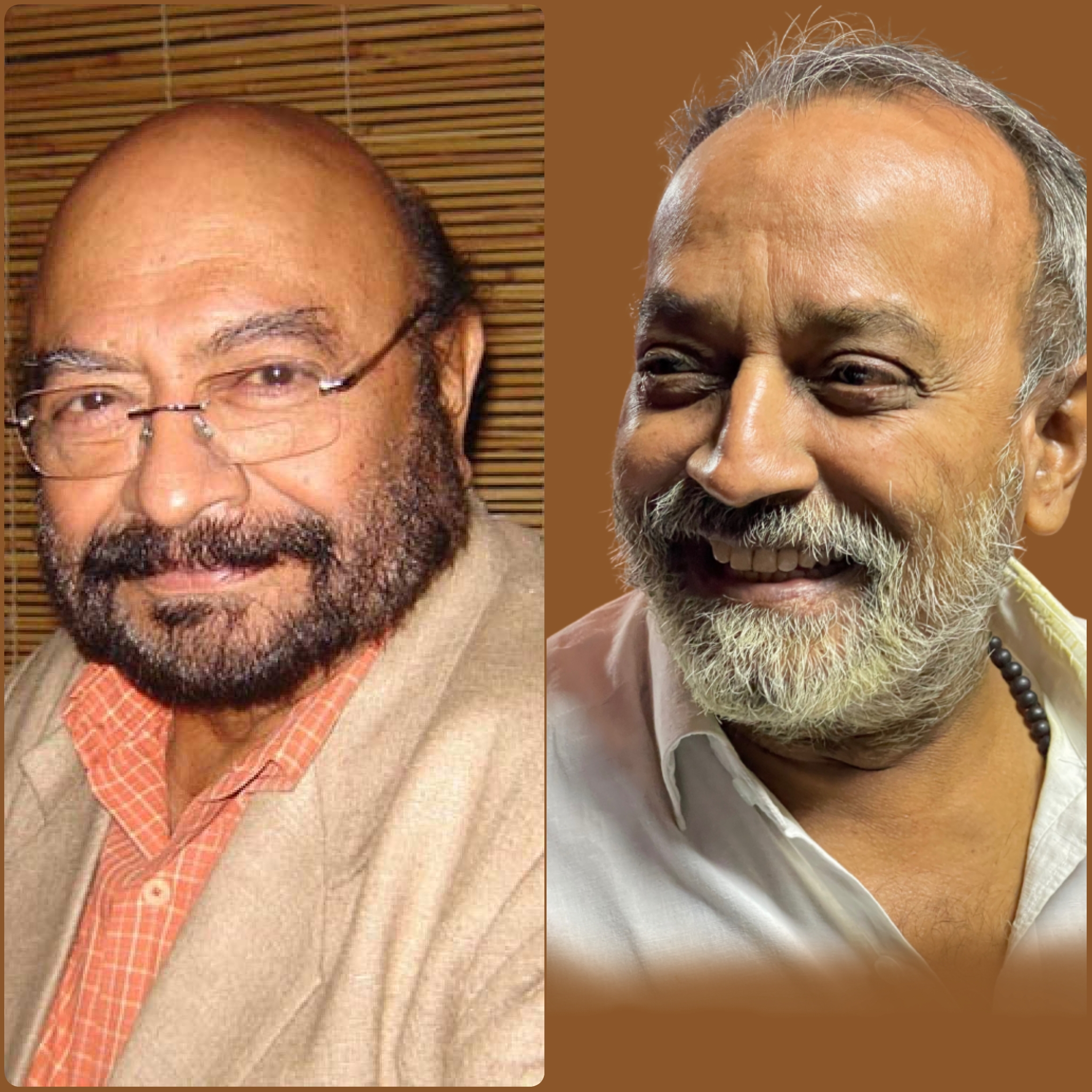
Legendary Conversation: Govind Nihalani & B. Lenin!
Mar 19 2026
Govind Nihalani in Conversation with Editor B. Lenin
Introduction
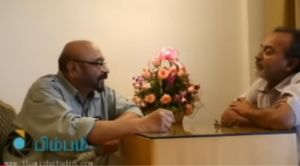
In this insightful conversation, acclaimed cinematographer and filmmaker Govind Nihalani engages with legendary editor B. Lenin, reflecting on cinema, craft, and the evolving language of filmmaking. The discussion moves beyond technique into philosophy, responsibility, and storytelling.
Here is the same content rewritten as a clean conversational excerpt format (like a transcript-style article, ideal for SICA
(Edited Excerpts in Q&A Format)
Early Inspirations & Visual Awakening
Based on the conversation between Govind Nihalani and B. Lenin, here is the discussion organized.
B Lenin: How did your interest in cinema begin?
Govind Nihalani: It started in my childhood in Karachi. My family was very conservative and only took me to mythological or historical films. I remember seeing my first film there as a little kid, and that feeling gave me such pleasure that cinema became my lifelong source of joy.
B Lenin: What were some of your early visual influences?
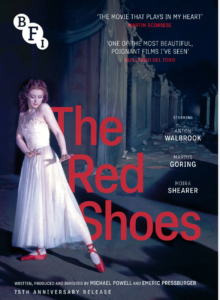
Govind Nihalani : After moving to Udaipur, I discovered Hollywood films. Two specifically stayed with me: Lust for Life, where I was mesmerized by a technical shot that froze into a Van Gogh painting, and The Red Shoes, which introduced me to the work of major UK cinematographers.

B.Lenin: Where did you receive your formal training?
Govind Nihalani: In 1959, I went to Bangalore to study at the Sri Jayachamarajendra Polytechnic. It was the only place at the time that offered a specialized course in cinematography.

B Lenin: What was it like handling a professional camera for the first time?
Govind Nihalani : While at the institute, a filmmaker asked for a student team to shoot a sequence in Hampi. I was made the cameraman. We used an EyeMO camera and a huge Japanese “Siki” camera. Shooting outdoors in natural light at such a historical site was my first real independent experience.

B Lenin: How did you come to work with the legendary V.K. Murthy?
Govind Nihalani : He was an alumnus of my institute working with Guru Dutt in Bombay. Our course required six months of practical studio training to get a diploma. After seeing Kaagaz Ke Phool in Bangalore, I decided I had to go to Mr. Murthy. I eventually started my training at Famous Studios in 1962.
Q: You are known for your work in 16mm. Why did you choose that format for your first film?
A: At the time, there was criticism that the Film Finance Corporation was wasting national money. I was told if I shot in 16mm, I could get funding. I calculated that while blowing it up to 35mm cost money, the savings on raw stock were massive—especially since we were only allowed 13,000 feet of 35mm stock back then due to foreign currency limits.
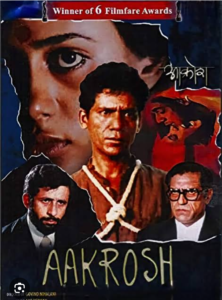
B Lenin: How did you review your footage for Aakrosh without a big budget?
Govind Nihalani : I didn’t have money to hire a theater. I watched the rushes in my own unfurnished house, lying on mattresses on the floor, while a hired projectionist ran the 16mm machine silently for three or four days.
B.Lenin What is your philosophy regarding film pacing?
Govind :There are three kinds of pace. One is driven by the plot, another is created by fast cutting and music, but the third and most difficult is the “interior pace”—the development of what is happening in the character’s mind.
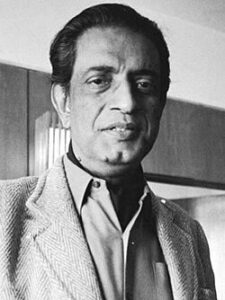
B Lenin: Can you describe your relationship with Satyajit Ray?
Govind: We had a very good rapport. I remember once in Bombay, he narrated an entire 30-minute film he had made for French television to me, shot-by-shot. It took him exactly 30 minutes to narrate it. I felt honored that he treated me as an equal.
B lenin: How do you feel about modern digital editing compared to the old days?
Govind Nihalani: I love the new technology. Earlier, with celluloid, you had to be very careful because every decision was permanent. Now, I go to the editing table fearlessly. I can add or remove frames with a click and instantly judge the rhythm on a big monitor.
Q: What are your plans for your next film?
A: I want to break away from the “oppressive” or “social injustice” stereotypes that have formed around my earlier work. I’m interested in exploring different genres—perhaps a musical, a thriller, or something involving magic realism—while ensuring the content still goes beyond the genre itself.
Thinking Like a Director Early On
B. Lenin:
When did you start thinking like a director?
Govind Nihalani:
Because of my training, I was never limited to cinematography alone. Understanding editing, sound, and processing allowed me to visualize the entire film.
So even when I was shooting, I was already thinking like a director constructing the final narrative.
The Shift to 16mm & Independent Thinking
B. Lenin:
Why did you choose 16mm for your early directorial work?
Govind Nihalani:
It was both an economic and artistic decision. Shooting on 35mm was expensive, and 16mm gave us freedom.
We were essentially part of a movement that made filmmaking more accessible and regionally expressive.
Technical Challenges of 16mm
B. Lenin:
What were the challenges of working with 16mm?
Govind Nihalani:
The biggest issue was blow-up to 35mm. Techniques like liquid gate printing were complex and not always reliable.
Even something as simple as a freeze frame required enormous effort. Today it’s effortless, but back then it demanded precision and patience.
Collaboration & Sound Design
B. Lenin:
Tell us about your collaborations, especially in sound.
Govind Nihalani:
Working with Mangesh Desai was a revelation. I realized sound is not just support — it fills emotional gaps between dialogues.
Silence, ambient sound, texture — all these elements shape how a scene is experienced
Influence of Satyajit Ray
B.Lenin
Did Satyajit Ray influence your filmmaking?
Govind Nihalani:
Absolutely. I once had the privilege of meeting him, and he narrated a short film to me — shot by shot.
That clarity of thought, that precision — it was extraordinary. It showed me how deeply a filmmaker must visualize before execution.
Approach to Storytelling
B. Lenin:
How would you describe your storytelling style?
Govind Nihalani:
I am more interested in character-driven narratives rather than plot-heavy stories.
Cinema, for me, is about exploring the inner life of characters, their conflicts, their evolution — not just external action.
Closing Note
This conversation reveals how Govind Nihalani bridges technical mastery and emotional storytelling, evolving from a cinematographer into a filmmaker with a deeply human perspective on cinema.
Govind Nihalani:
In the end, cinema is not about what you show… it is about what the audience feels.
🎬 Govind Nihalani in Conversation with Editor B. Lenin as summary
In this insightful conversation, acclaimed cinematographer and filmmaker Govind Nihalani engages with legendary editor B. Lenin, reflecting on cinema, craft, and the evolving language of filmmaking. The discussion moves beyond technique into philosophy, responsibility, and storytelling.
Key Excerpts & Insights
🎥 Cinema as a Language
Cinema is not merely about visuals—it is a structured language of expression.
Every frame, cut, and movement carries meaning beyond aesthetics.
Filmmaking demands clarity of thought before technical execution.
👉 Core idea: Technique should serve the narrative—not dominate it.
✂️ Role of Editing in Storytelling
Editing is where the film truly comes alive.
It is not just assembling shots, but shaping emotion, rhythm, and meaning.
A good editor understands the director’s vision while adding interpretative depth.
👉 Insight: Editing is the invisible force that controls audience perception.
🎭 Realism vs Stylization
Nihalani emphasizes the importance of authenticity in storytelling.
Realism is not about copying reality, but interpreting truth cinematically.
Stylization must emerge organically from the story.
👉 Takeaway: Truth in cinema comes from emotional honesty, not surface realism.
🎬 Cinematography Philosophy
Light is not just illumination—it is emotion and character.
Frame composition must reflect psychology and narrative tension.
Cinematography should remain invisible when done right.
👉 Key point: A cinematographer is a storyteller, not just a technician.
Filmmaking Discipline
Strong emphasis on reading, observation, and life experience.
Filmmakers must develop intellectual depth, not just technical skills.
Cinema is a result of continuous learning and cultural awareness
👉 Lesson: A filmmaker’s mind is more important than the camera.
🎞️ Evolution of Technology
Technology has expanded possibilities but also created creative shortcuts.
True cinema still depends on fundamentals—story, structure, and emotion.
Tools evolve, but storytelling principles remain constant.
👉 Warning: Over-reliance on technology can dilute cinematic depth.
Closing Thought
This conversation highlights that cinema is a blend of art, intellect, and discipline. Whether it is cinematography or editing, every craft must align with the core purpose of storytelling.
“Cinema is not what you show—it’s what the audience feels between the cuts.”
Video by Dinesh kumar Champ
Article redrafted by
CJ Rajkumar
Author/ Cinematographer
—