Berlin Film Festival 2026!
Feb 22 2026
🎬 Berlin International Film Festival 2026 (Berlinale 2026) — Complete Summary
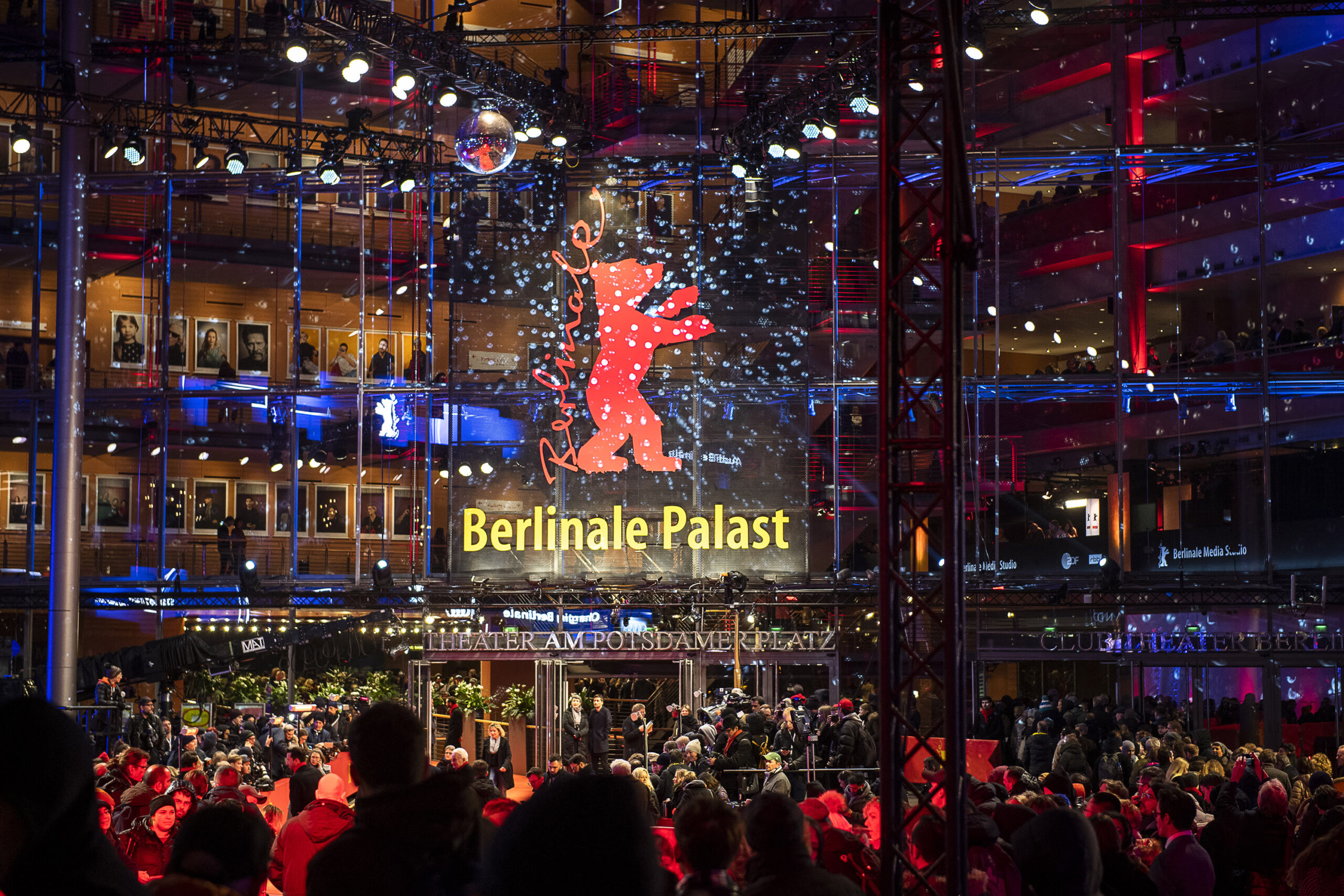
The 76th Berlin International Film Festival (Berlinale 2026) was held from February 12–22, 2026 in Berlin, Germany — one of the world’s most politically and artistically influential film festivals alongside Cannes and Venice.
This year’s edition strongly highlighted cinema as political expression, with debates around democracy, censorship, war, and artistic responsibility dominating discussions.
🏆 Major Award Winners
🐻 Golden Bear – Best Film
🎥 Yellow Letters
Director: İlker Çatak (Germany / Turkey)

A powerful political drama about a theatre couple destroyed by state repression.
Explores authoritarian control and its impact on personal lives.
Jury President Wim Wenders praised it for its universal political relevance.
🥈 Silver Bear – Grand Jury Prize
🎥 Salvation – Directed by Emin Alper
A socially charged film continuing Berlinale’s tradition of politically conscious storytelling.
🥈 Silver Bear – Jury Prize
🎥 Queen at Sea – Directed by Lance Hammer
Emotional drama dealing with aging and dementia themes.
🎬 Silver Bear – Best Director
Grant Gee – Everybody Digs Bill Evans
Recognized for innovative cinematic storytelling and musical biography treatment.

🎭 Best Leading Performance
Sandra Hüller – Rose
Historical drama performance widely acclaimed for emotional intensity.
🎭 Supporting Performance
Anna Calder-Marshall & Tom Courtenay – Queen at Sea
✍️ Best Screenplay
Geneviève Dulude-de Celles – Nina Roza
🎨 Outstanding Artistic Contribution
Anna Fitch & Banker White – Yo (Love Is a Rebellious Bird)
🎥 Best Documentary
🎬 If Pigeons Turned to Gold – Pepa Lubojacki
🌟 Honorary Golden Bear
Michelle Yeoh
Awarded for lifetime contribution to world cinema.
🌍 Key Themes of Berlinale 2026
1. Cinema & Politics
Festival heavily influenced by global political tensions, especially discussions around Gaza, Iran, and democratic freedoms.
Several filmmakers used acceptance speeches for political solidarity statements.
2. Strong Auteur Cinema
22 competition films from leading global directors.
Continued Berlinale identity as director-driven, socially conscious cinema rather than commercial premieres.
3. Rising Global Voices
Increased participation from Middle Eastern, Asian, and European filmmakers.
More women directors compared to previous editions.
🎥 Festival Highlights
Opening Film: ** No Good Men ** by Shahrbanoo Sadat.
Jury President: Legendary filmmaker Wim Wenders.
Berlinale continued its reputation as the most politically engaged major film festival.
🎬 Industry Significance (Important for Film Students & Filmmakers)
Berlinale 2026 reaffirmed that:
✅ Political storytelling remains globally relevant
✅ Personal stories with socio-political context travel internationally
✅ Actor-driven dramatic cinema is returning strongly
✅ Festivals still shape OTT and awards-season circulation
🎥 Cinematography Trends Observed at Berlinale 2026
Berlinale has always been a cinematographer’s festival — unlike Cannes glamour or Venice spectacle, Berlin rewards visual honesty, realism, and narrative-driven imagery.
The 2026 edition clearly showed where world cinematography is moving next.
🌫️ 1. Natural Light Dominance (Controlled Realism)
Trend
Most competition films avoided heavy artificial lighting.
Approach observed:
Window light as key source
Practical lamps replacing film lights
Underexposed shadows retained
Real environmental contrast preserved
Why?
Directors are moving toward psychological realism rather than visual perfection.
👉 Image feels observed, not constructed.
Student Note (CFA): This confirms why understanding light behaviour > equipment ownership.
🎥 2. Handheld & Human Camera Movement
Trend
Steadicam and gimbal overuse is reducing.
Instead:
Shoulder-mounted cameras
Imperfect micro-movements
Breathing camera rhythm
Camera behaves like another character.
Observation
Emotional scenes often used:
Long handheld close-ups
Slow reframing instead of cutting
👉 Audience feels presence inside the moment.
🎞️ 3. Longer Takes & Invisible Editing
Trend
Editors and cinematographers collaborated for:
✅ Fewer cuts
✅ Performance-driven blocking
✅ Moving compositions
Many scenes played 2–4 minutes without interruption.
This recalls traditions from:
Tarkovsky
Béla Tarr
Theo Angelopoulos
But executed with modern digital flexibility
🎨 4. Muted Color Palette & Emotional Color Science
Trend
Shift away from OTT-style heavy grading.
Common look:
Slight desaturation
Soft skin tones
Earth colors
Controlled highlights
Filmic contrast curves
Digital cameras graded to feel memory-like rather than glossy.
👉 Emotion over vibrancy.
🌃 5. Darkness is Back (Fearless Exposure)
Trend
Cinematographers are no longer afraid of darkness.
Observed choices:
Faces partially hidden
Motivated night sources only
Shadow storytelling
Low ISO noise accepted aesthetically
Streaming platforms earlier demanded brightness —
Festival cinema is reclaiming contrast and mystery.
🎬 6. Performance-Centric Framing
Major Berlinale films used:
Profile compositions
Off-center framing
Negative space psychology
Static observation shots
Actors were allowed to move inside frame, instead of camera correcting constantly.
👉 Frame becomes emotional geography.
🔬 7. Large Format — But Used Subtly
Unlike commercial cinema:
Large-format sensors used for depth separation, not spectacle.
Wide lenses placed closer to actors.
Environmental intimacy instead of grand scale.
This is a major global shift:
> Large format now serves emotion, not only epic cinema.
Berlinale 2026 proves:
✅ Technology maturity phase is over
✅ Story sensitivity defines cinematography
✅ Imperfection = authenticity
✅ Lighting motivation matters more than lighting quantity
✅ Camera psychology is the future craft
Modern cinematography is moving from:
“How beautifully can I shoot?”
➡️ “How truthfully can I observe?”
Article by
CJ Rajkumar
Author/ Cinematographer