
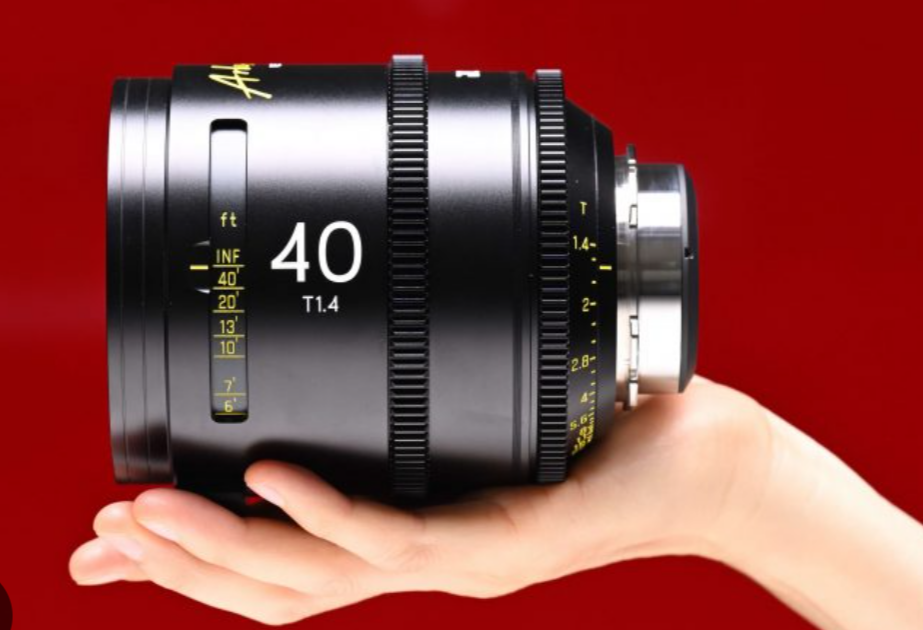
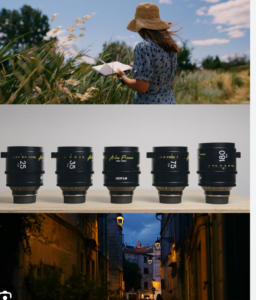
Dzo Arles primes!
May 14 2026
DZOFilm Arles Prime Lenses – Large Format Cinema With Character and Practicality
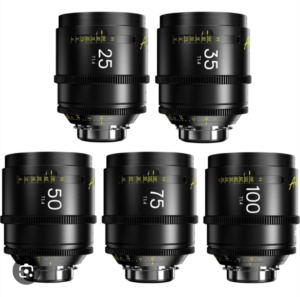
The evolution of modern cinematography is no longer only about resolution. Today’s cinematographers search for lenses that can balance large-format coverage, cinematic texture, smooth falloff, controlled sharpness, practical usability, and emotional rendering. In this landscape, the DZOFilm Arles Prime series has emerged as a noteworthy option that bridges premium cinematic aesthetics with production-friendly design.
Originally designed for large-format digital cinema cameras, the Arles series has steadily gained attention among cinematographers, independent filmmakers, commercial directors, OTT creators, and virtual production teams. The lenses are increasingly discussed not merely as affordable cinema primes, but as optics with their own visual identity.
For cinematographers who seek a refined cinematic image without entering the ultra-premium pricing territory of legacy lens systems, the Arles series presents an important conversation.
The Philosophy Behind Arles
Modern digital cinema cameras have reached extraordinary levels of sharpness and dynamic range. While this technological progress is impressive, many cinematographers feel that excessive clinical precision can sometimes reduce emotional depth. The visual language of cinema often requires softness in transitions, dimensionality in faces, smooth focus falloff, and an organic rendering that helps audiences emotionally connect with characters.
The DZOFilm Arles lenses appear to be designed around this philosophy.
Rather than chasing sterile sharpness, the Arles primes aim to preserve:
Natural skin rendering
Controlled contrast
Smooth focus transitions
Cinematic depth
Organic edge rolloff
Gentle highlight behavior
Consistent color reproduction across focal lengths
This makes them highly relevant in the present era where cinematographers are blending realism with cinematic mood.
Large Format Coverage
One of the major strengths of the Arles series is its large-format image coverage.
The lenses are designed to comfortably cover:
Full Frame cinema sensors
Open gate recording formats
Large format digital cinema cameras
Several emerging high-resolution sensor systems
This becomes extremely important today because many cinematographers prefer shooting with open-gate formats to maximize flexibility for:
OTT deliveries
Multiple aspect ratio outputs
IMAX-style extraction
Vertical content adaptation
VFX reframing
Stabilization margins
As cinema cameras evolve toward larger sensors, lens coverage becomes a serious long-term investment consideration. The Arles series positions itself well for this future-oriented workflow.
The Visual Character
Cinematic Softness Without Losing Detail
One of the interesting qualities of the Arles primes is how they maintain clarity while avoiding an overly electronic digital appearance.
The image retains:
Fine detail
Texture separation
Depth perception
Dimensional faces
Yet the rendering avoids harsh micro-contrast that can make digital cinematography feel brittle.
This balance is especially useful for:
Narrative cinema
Character dramas
Romantic sequences
Fashion visuals
Music videos
Period subjects
Emotional close-ups
Many cinematographers appreciate lenses that allow actors to appear cinematic rather than hyper-processed. Arles lenses contribute to this aesthetic.
Smooth Focus Falloff
A significant part of cinematic depth comes from how focus transitions occur.
The Arles primes display:
Smooth background separation
Creamy defocus regions
Gentle focus transitions
Controlled foreground blur
This creates a sense of dimensionality that helps isolate subjects emotionally.
Rather than aggressively separating subjects with artificial sharpness, the lenses create natural depth progression.
Skin Tone Rendering
Skin tone reproduction remains one of the most critical aspects of cinematography.
The Arles lenses generally produce:
Pleasant skin textures
Balanced warmth
Controlled highlight rolloff
Natural facial dimensionality
This becomes valuable in Indian cinematography where complexions vary significantly and lighting environments range from harsh sunlight to colorful practical lighting.
The lenses tend to maintain a cinematic softness without flattening facial details.
Color Consistency Across the Set
Lens consistency becomes extremely important during production.
Inconsistent color reproduction between focal lengths can create problems during:
Multi-camera shoots
Fast schedule productions
OTT workflows
DI grading
Continuity-heavy scenes
The Arles series has been appreciated for maintaining a relatively unified visual response across focal lengths.
This allows cinematographers and colorists to work more efficiently while preserving continuity in the final image.
Controlled Breathing
Modern audiences are highly sensitive to focus breathing, especially in dramatic close-up work.
The Arles primes demonstrate controlled breathing characteristics, helping focus pulls feel smoother and less distracting.
This is especially useful for:
Dialogue scenes
Emotional close-ups
Slow push-ins
Character-focused storytelling
Handheld dramatic moments
Controlled breathing contributes to a more immersive cinematic experience.
Build Quality and Mechanical Design
The Arles lenses are built with professional cinema operation in mind.
Professional Mechanics
Key design aspects include:
Cinema-standard gearing
Long focus throw
Smooth focus resistance
Robust mechanical construction
Uniform front diameters across the set
Consistent gear positioning
These characteristics support:
Follow focus systems
Wireless focus setups
Gimbal operation
Studio rigs
Matte box compatibility
Assistant camera workflows
For focus pullers, consistency in lens mechanics can significantly improve shooting efficiency.

Weight and Practicality
One of the strongest practical advantages of the Arles series is the balance between premium cinematic behavior and manageable physical design.
In today’s production environment, lenses must often function across:
Handheld work
Gimbals
Drones
Steadicam
Vehicle mounts
Virtual production setups
Compact camera bodies
The Arles lenses maintain a professional cinematic presence while remaining relatively production-friendly.
This flexibility is especially attractive for independent filmmakers and hybrid production environments.
Fuji Eterna 55
Sony Venice
Sony FX6
Sony FX3
RED systems
ARRI Alexa Mini LF
Blackmagic Cinema Camera systems
Canon Cinema EOS cameras
Full-frame mirrorless cinema configurations
The lenses complement modern sensors by introducing a more cinematic optical texture while still retaining adequate sharpness for 4K, 6K, and higher-resolution workflows.
Large-format capability
Cinematic rendering
Practical production usability
Emotional softness
Controlled sharpness
Consistent mechanics
Professional workflow integration
For cinematographers working across feature films, OTT productions, commercials, documentaries, and independent cinema, the Arles primes offer a compelling balance of artistry and practicality.
In an era where digital cinema technology advances rapidly, lenses continue to remain the emotional heart of image-making. The DZOFilm Arles series reminds filmmakers that beyond resolution charts and specifications, cinema still depends on how images feel.
And sometimes, that feeling is what truly separates a recorded image from a cinematic experience.
Article by
CJ Rajkumar
Author/ Cinematographer