
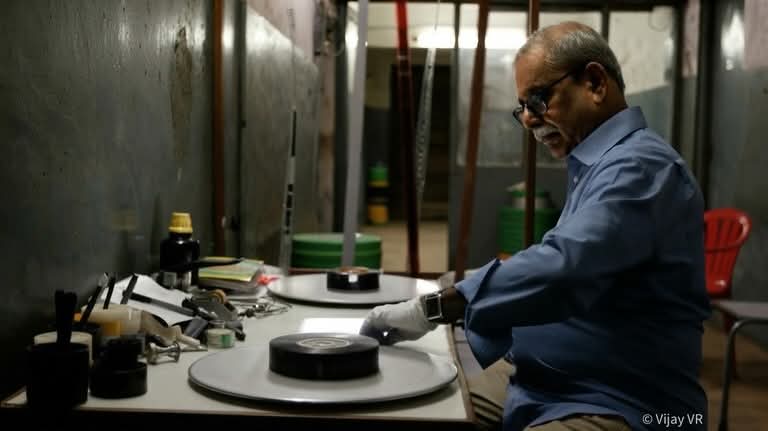
S. Sivaraman: Legacy of art & science of cinema
Aug 18 2026
Views: 615
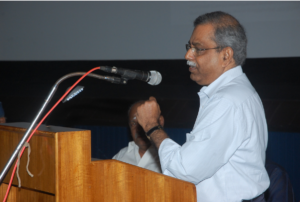
S. SIVARAMAN
A Life Devoted to the Art, Science and Soul of Cinema
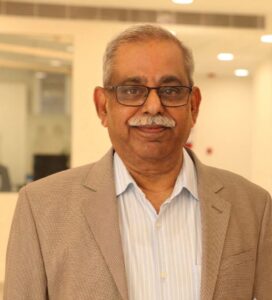
A Tribute from the Cinematographers’ Community
The passing of Shri S. Sivaraman, the distinguished Technical Head of Prasad Film Laboratories, Chennai, is a profound loss to the Indian film industry and, in particular, to the community of cinematographers who regarded him not merely as a laboratory technician, but as a trusted custodian of the image.
Sivaraman sir belonged to a generation of film professionals who understood cinema from its very foundation—from the moment light entered the camera, through the exposed negative, chemical processing, colour timing and printing, to the final image that appeared on the silver screen.
His was a remarkable journey through the evolution of motion-picture technology.
From black-and-white film to colour, from subtractive colour timing to additive printing, from 35mm and 70mm to Dolby and digital workflows, Sivaraman sir witnessed, understood and contributed to some of the most significant technological transformations in Indian cinema.
But beyond technology, what distinguished him was his passion for image quality and his deep respect for cinematographers.
A Journey That Began with Physics
S. Sivaraman graduated in Physics from Scott Christian College, Nagercoil, before coming to Chennai to pursue a Diploma in Film Technology, specialising in film processing, at the Adyar Film Institute.
His professional journey then took him to Mumbai, where he joined the reputed Famous Cine Laboratories.
There, he spent several formative years working across both black-and-white and colour departments. He gained experience with different film formats, including 35mm and 16mm, as well as format conversions such as 35mm-to-16mm reduction.
It was a period when film laboratory work demanded extraordinary patience, precision and craftsmanship.
Colour grading was then performed through the subtractive system, a highly skilled and time-consuming process. A feature film could take several weeks to complete its colour balancing. Timers, graders, laboratory technicians, printers and cinematographers had to work together with extraordinary precision.
Sivaraman sir mastered this world.
He understood that the laboratory was not merely a place where film was processed. It was an extension of the cinematographer’s creative space.
Understanding Light Beyond the Camera
One of Sivaraman sir’s greatest strengths was his profound understanding of the relationship between exposure, density, contrast, colour and light.
He often explained how black-and-white cinematography demanded exceptional control because the image had to be created through shadows, highlights and middle tones.
In colour cinematography, colour separation naturally contributes to the perception of depth. In black and white, the cinematographer and the timer had to work much harder to preserve that depth.
Night scenes were particularly demanding.
The laboratory professional had to make sensitive judgements about shadow detail, density and contrast while preserving the cinematographer’s original intention.
This required not only technical knowledge but also experience, observation and aesthetic judgement.
That combination defined Sivaraman sir.
The Laboratory — The Cinematographer’s Second Workplace
Perhaps one of the most beautiful aspects of Sivaraman sir’s philosophy was his understanding of the relationship between a laboratory and a cinematographer.
He believed that a laboratory committed to quality must consider the cinematographer one of its most important visitors.
For him, the laboratory was essentially the second workplace of the cinematographer.
The cinematographer might be shooting hundreds or thousands of kilometres away, but the laboratory was working continuously on his or her behalf.
This philosophy explains why generations of cinematographers trusted Sivaraman sir.
He understood that every negative carried the vision of the cinematographer.
His responsibility was not simply to process that negative, but to help bring out its full potential.
Over decades, laboratory technicians had the rare opportunity to see millions of feet of exposed negative from cinematographers of different generations, styles and levels of experience.
Sivaraman sir transformed that exposure into knowledge.
He understood how different cinematographers worked, how they exposed their negatives, how they approached light and what kind of densities were necessary to achieve the intended final image.
That accumulated knowledge made him an invaluable friend and guide to cinematographers.
From Lilly to Digital
The history of Sivaraman sir’s career is, in many ways, the history of technological change in cinema itself.
During the traditional film era, cinematographers would expose additional frames at the end of shots, known as lillies, which were later used during the colour-timing process.
The colour correction process involved painstaking work with Yellow, Magenta and Cyan filters.
Every scene had to be carefully balanced.
Exposure variations, changes in lighting conditions, colour temperature, film stock, storage and processing could all influence the final image.
The cinematographer and grader therefore worked closely together, refining the image until the desired result was achieved.
Sivaraman sir belonged to this generation of craftsmen.
But he was never afraid of change.
Embracing Technology
At Prasad Film Laboratories, Sivaraman sir witnessed and participated in the transition to the additive system of colour printing and electronic colour analysis.
This was a major technological advancement.
The introduction of electronic colour analysis and automated printing transformed the colour-correction process. RGB values and frame-count information could be transferred to the printing system, enabling significantly faster and more accurate colour balancing.
A process that had once taken weeks could be completed within a much shorter period.
Sivaraman sir embraced these changes while preserving the fundamental principle behind them:
Technology may change, but the responsibility to protect the cinematographer’s image never changes.
That philosophy remained constant throughout his career.
A Pioneer at Prasad Film Laboratories
His long association with Prasad Film Laboratories placed him at the centre of several important developments in Indian cinema technology.
The laboratory worked with numerous formats, including 16mm, 35mm and 70mm, and handled different forms of inter-format conversion.
Prasad also pioneered facilities for 70mm release printing with magnetic striping and multi-track stereophonic sound, enabling Indian productions to access technologies that had previously required work abroad.
The laboratory later embraced technologies such as Dolby SR, Dolby Digital, DTS and 3D release printing.
Sivaraman sir was part of this extraordinary technological journey.
He continuously learned, adapted and helped the industry move forward.
From Timer to Grader to Colorist
One of the most profound observations in Sivaraman sir’s writings is that although the professional title changed over generations, the essential responsibility remained the same.
The Timer of the black-and-white era became the Grader of the colour-film era.
The Grader eventually became the Colorist of the digital era.
The tools changed.
The machines changed.
The technology changed.
The terminology changed.
But the fundamental responsibility remained:
To understand the cinematographer’s intention and deliver the best possible image.
This was the philosophy that Sivaraman sir lived by.
His career therefore represents much more than a professional journey. It represents a bridge between generations of cinema technology.
A Teacher Without a Classroom
Many cinematographers who interacted with Sivaraman sir will remember that he was, in his own way, a teacher.
His classroom was the laboratory.
His lessons were found in negatives, prints, densities, colours, exposures and conversations.
He taught through experience.
He could discuss the technical characteristics of film while simultaneously understanding the aesthetic concerns of the cinematographer.
He represented a rare generation of technicians who could speak the language of both science and cinema.
For young cinematographers, technicians and students, professionals like Sivaraman sir were living repositories of knowledge.
Much of what they knew could not be found in manuals.
It was knowledge accumulated through decades of looking at film.
A Man Who Believed in Quality
At the heart of Sivaraman sir’s career was a simple principle:
Quality matters.
He believed that technology should serve creativity, not replace it.
Even when digital filmmaking began transforming the industry, he recognised its enormous advantages—speed, flexibility, cost efficiency, visual effects capabilities, remote workflows and multiple delivery formats.
At the same time, he also understood the challenges of digital cinema: rapidly changing hardware, evolving formats, complex workflows, enormous data volumes, storage requirements and concerns about maintaining consistent image quality.
His approach was neither resistance nor blind acceptance.
It was understanding.
He welcomed progress while reminding the industry that technology alone cannot create a great image.
The eye, judgement, discipline and sensitivity of the filmmaker remain fundamental.
A Special Place in the Hearts of Cinematographers
For generations of cinematographers, Sivaraman sir was much more than the Technical Head of a laboratory.
He was a friend, guide, sounding board and guardian of the image.
Many cinematographers would sit with him, discuss their negatives, examine prints and work together towards the image they had imagined while shooting.
That relationship was built on trust.
A cinematographer entrusts the laboratory with something precious—the recorded image created through months of preparation, difficult locations, lighting decisions and artistic choices.
Sivaraman sir understood that responsibility.
That is why his absence will be deeply felt.
His Contribution Will Remain on the Screen
Cinema is an art where many people contribute, but not all contributions are visible in the credits.
There are technicians whose work lives silently inside every frame.
Sivaraman sir was one of them.
His contribution can be found in countless images that reached theatres across generations.
Every correctly processed negative, every carefully balanced scene, every beautiful print and every technological advancement he helped implement carries a part of his professional legacy.
His work may not always have been visible to the audience.
But it was visible in the image.
And for a cinematographer, the image is everything.
A Bridge Between Two Cinemas
Sivaraman sir belonged to a unique generation.
He experienced cinema when film was physical, chemical and mechanical.
He witnessed the transition from black-and-white to colour.
He worked through subtractive timing and additive printing.
He experienced 35mm, 16mm and 70mm.
He saw the arrival of Dolby and digital sound technologies.
He witnessed the emergence of digital intermediate workflows.
He watched the timer become the grader and the grader become the colourist.
And throughout this transformation, he remained committed to the same fundamental idea:
The technology may change, but the passion for a beautiful image must never change.
His Legacy
Today, as we bid farewell to S. Sivaraman sir, we do not remember only the Technical Head of Prasad Film Laboratories.
We remember a custodian of cinema.
We remember a man who devoted his professional life to understanding how light becomes an image and how that image survives the complex journey from camera to screen.
We remember his patience.
His technical knowledge.
His humility.
His commitment to quality.
His affection for cinematographers.
And his willingness to share what he had learned.
The younger generation may know cinema through digital sensors, LUTs, colour-management systems and sophisticated grading suites.
But the foundation upon which much of that knowledge stands was built by generations like Sivaraman sir, who spent countless hours looking at film, understanding density, studying colour and learning the delicate art of transforming a cinematographer’s vision into a finished image.
A Personal and Collective Farewell
For the cinematographers of South India, his passing is not merely the loss of a respected laboratory professional.
It is the loss of one of our own.
He understood our struggles.
He understood exposure.
He understood light.
He understood the uncertainty that comes after a difficult shoot when the cinematographer waits to see the processed negative.
And he understood the joy of seeing the image finally come alive on screen.
That bond can never be replaced.
Sivaraman sir’s journey with films may have come to an end today, but his journey through the images of Indian cinema will continue for generations.
The frames he helped create will continue to live.
The knowledge he shared will continue through the cinematographers and technicians he guided.
And the principles he stood for—precision, patience, adaptability and an uncompromising commitment to image quality—will remain part of the culture of Indian cinematography.
Farewell, Sivaraman Sir.
You spent a lifetime looking at light.
You helped generations of cinematographers preserve their vision.
You stood behind the image, even when your name was not seen on the screen.
Today, the entire cinematographers’ fraternity stands together to remember you with gratitude, affection and the deepest respect.
May your soul rest in peace.
Your journey with films has ended,
but your journey through cinema will never end.
With profound respect and heartfelt condolences.
— The Cinematographers’ Fraternity / SICA
Article by
CJ Rajkumar
x
^